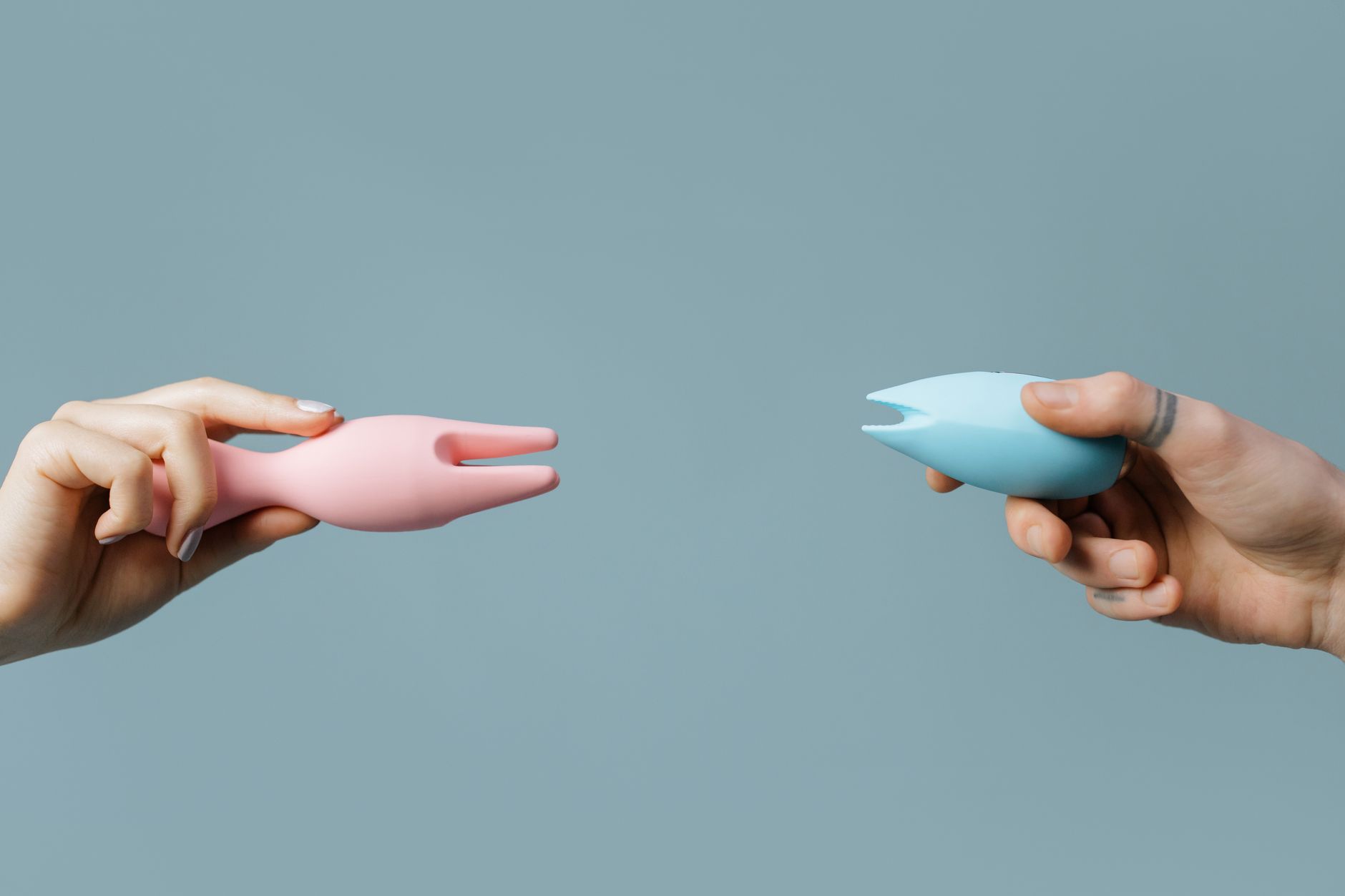
Let's be real about long-term relationships and sex
Ten years in. Fifteen. Twenty. The sex that used to feel spontaneous and urgent now feels like something on a mental checklist, sandwiched between laundry and mortgage payments. You still love your partner. You're not unhappy. But you're also not exactly having the kind of sex that makes you think "I want that tonight."
Most couples I work with describe this phase as a kind of flatness. Not pain, not conflict. Just... absence.
The thing nobody tells you is that reconnecting sexually in a long-term relationship is actually easier than reconnecting after a breakup or trauma. You have infrastructure. You have history. You have someone who already knows your body and your quirks. What you need is permission to start over, and a practical way to break the old pattern.
Why lemon vibrators are a specific tool for this moment
Here's the data twist: clitoral vibrators, especially lemon suction-style toys, work differently in established relationships than they do for solo play or newer partnerships. In long-term couples, they do three things at once. They give you access to pleasure pathways you may have lost or never fully explored. They create a conversation without requiring you to have "the talk." And they shift the dynamic from performance back to sensation.
The Lem and other lemon vibrators are designed around air-suction technology, which means they stimulate rather than vibrate. For people who've been having the same kind of sex for years, this feels novel. It's not about ramping up intensity. It's about approaching pleasure from a completely different angle.
When you're reconnecting with a long-term partner, novelty is permission. It resets the nervous system. It says "this isn't what we've always done, so the old expectations don't apply here."
The conversation before the toy arrives
You don't need to make this a serious production. But you do need one honest sentence before you introduce a lemon clitoral vibrator into the bedroom. Something like:
"I want to try something new because I miss feeling excited about sex. I'm thinking about getting a clitoral vibrator, and I'd like to explore it together. No pressure either way, but I wanted to ask first."
That's it. You've named the actual problem (sex has become routine), you've proposed a concrete solution (a toy), and you've created space for your partner to say yes or raise concerns.
The reason this works is because you're not asking permission to fix yourself or criticizing what you have. You're inviting them into something you want to try. Big difference.
How to introduce it the first time
First session: separate the toy from partnered sex. Get comfortable with it solo first. Use it when you're alone, figure out which settings feel good, what kind of stimulation builds arousal for you. This matters because when you finally use it with your partner, you won't be figuring it out in real time while they're watching.
Second session: show, don't perform. Tell your partner you want them in the room, but the focus is on you exploring, not on putting on a show. "I want you to watch because I like you here, but I'm just going to play around and see what feels good." Some people find this incredibly hot. Some find it awkward. Both are fine. You're gathering data.
Third session: invite them to touch you while you use it. Not necessarily the toy itself. Just your shoulder, your arm, your hair. Contact that says "we're in this together." This often naturally leads to partnered sex, but it doesn't have to. The point is breaking the old rhythm and creating new nerve pathways in your relationship.
When you're ready to use it together during sex
Start before penetration. Use the lemon vibrator for foreplay, let it bring you to high arousal. This serves two purposes: you feel amazing, and your body's natural lubrication increases, which makes everything that comes next feel better for both of you.
If penetration is part of your sex life, the clitoral vibrator can stay where it is while your partner enters. This is different from how many people used vibrators before. Most traditional vibrators require a shift in position or angle. Air-suction toys like the Lem sit right where they work and don't need repositioning.
If your partner wants to hold the vibrator while you're together, that's even better. It gives them a role in your pleasure that doesn't rely on physical stamina or performance anxiety. They're controlling something that's directly making you feel good. That's intimate in a way that purely passive sex often isn't.
The emotional layer that matters most
In long-term relationships, the sex problem is almost never actually about the sex. It's about feeling wanted, known, and prioritized. When you introduce a lemon clitoral vibrator together, you're saying "your pleasure matters enough to me that I'm willing to feel a little awkward here." That's the actual reconnection.
Don't expect everything to shift overnight. You're building new habits and new neural associations with sex. It takes about 3-4 times of doing something differently before it starts to feel normal instead of new. Some couples find that once they've broken the old pattern, they don't even need the toy every time. Others discover they want it regularly. Both are normal.
The key is that you've proven to each other that this part of your relationship is worth tending to. That matters more than any specific technique or toy.
What to do if it feels awkward (because it probably will)
Awkwardness is not failure. Awkwardness is what happens when you're doing something new with someone you've been comfortable with in familiar ways. It's actually a sign that you're breaking pattern.
If it feels weird or uncomfortable the first time, say so. "This feels weird and I like it" or "This feels weird and I don't like it" are both useful data. Then you adjust. Maybe the toy comes out only sometimes. Maybe you use it solo first and partnered later. Maybe you explore what speed or pressure actually feels good for your body.
The one thing that doesn't work is pretending everything feels fine when it doesn't, or pushing yourself to enjoy something that doesn't actually work for your body. Long-term relationships have enough unspoken resentment built in without adding faked orgasms to the pile.
Practical settings and rhythm for reconnecting couples
When you're using a lemon clitoral vibrator with a long-term partner, start low. If you're using something like the Lem, begin with pattern 1 or 2. You're not trying to reach orgasm as fast as possible. You're trying to feel something different, to wake up nerve endings that might have gotten used to the same stimulation for years.
Spend time in the lower patterns. Let arousal build slowly. This changes the whole quality of sex. Instead of racing toward an outcome, you're actually in your body, noticing sensation.
If your partner is inside you while you're using the vibrator, the pressure and sensation will feel different at different angles. Play around. What feels incredible at one angle might feel intense or uncomfortable at another. You get to move and explore. That movement is what breaks the old pattern.
When reconnection becomes regular intimacy
Some couples use clitoral vibrators occasionally to keep novelty alive. Some make them part of regular sex. Some find that reintroducing pleasure this way leads to wanting sex more often, which leads to deeper connection, which leads to better communication everywhere else.
There's no right answer. The point is that you've created a new option. You're not doing what you've always done. That change itself is the beginning of reconnection.
FAQ
Can using a lemon vibrator during sex damage the intimacy if my partner feels replaced?
Only if you don't talk about it. Most partners who feel "replaced" by a toy didn't actually understand what the toy was for. Frame it clearly: "This isn't instead of you. This is because I want to feel more alive in our sex life, and I want you there with me." If your partner still feels threatened after a calm conversation, that's pointing to a deeper issue about insecurity or feeling wanted that probably needs conversation or therapy. The toy isn't the real problem.
What if I orgasm with the vibrator but I've never orgasmed with my partner alone?
That's actually common, and it doesn't mean your partner is doing something wrong. It often means your body needs specific stimulation that partnered sex alone doesn't provide. Using the toy with your partner there doesn't mean you're cheating or being unfaithful. It means you're learning your own pleasure and inviting your partner into that learning. Many couples find this deepens intimacy because both people are paying attention to actual sensation rather than assumptions.
Is there a way to use a lemon clitoral vibrator that won't feel performative or weird?
Yes. Stop thinking of it as "using the toy" and start thinking of it as "exploring pleasure together." You're not doing it for him. You're not doing it for her. You're doing it because you want to feel alive in your body again, and you want your partner present for that. The weirdness dissolves when the intention is clear.
How often should we use a lemon vibrator if we're trying to rebuild intimacy?
Start with once a week or whenever you have partnered sex for the next month. After that, let it find its own rhythm. Some weeks you'll want it. Some weeks you won't. The pattern isn't as important as the signal you're sending: "We're still exploring. We still care about this."
What if my partner wants to use the vibrator on me but I feel self-conscious?
That self-consciousness usually comes from the idea that being pleasured is passive or indulgent. It's not. You're giving your partner the gift of knowing what makes you feel good. You're also breaking the pattern where sex is about performance for both of you. Start with lower intensity and less direct eye contact if that helps. Build from there.
Can we use a lemon vibrator if we haven't had sex in years?
Absolutely. In fact, reintroducing sex after a long pause often works better with a toy than without one. A clitoral vibrator gives you permission to go slow, to rebuild arousal gradually, to take the pressure off performance. You might find that using one actually makes it easier to reconnect physically because it takes away some of the anxiety.
The thing about reconnection
After years together, you don't need passion to rebuild. You need attention. You need to show up for each other's pleasure as if it matters. A lemon vibrator is just the tool. The real work is deciding that this part of your relationship is worth investing in.
If you're feeling disconnected in your long-term relationship, you might also find it helpful to read about how to use lemon vibrators when you want to slow down intimacy or explore how to use lemon vibrators when communication breaks down in long-term relationships. Both address the emotional side of reconnection.
Your pleasure matters. Your partner's attention matters. You deserve to feel alive in your body, even after years together. Sometimes that starts with a conversation. Sometimes it starts with a new tool. Usually it starts with deciding that this part of your life is worth the awkwardness of beginning again.