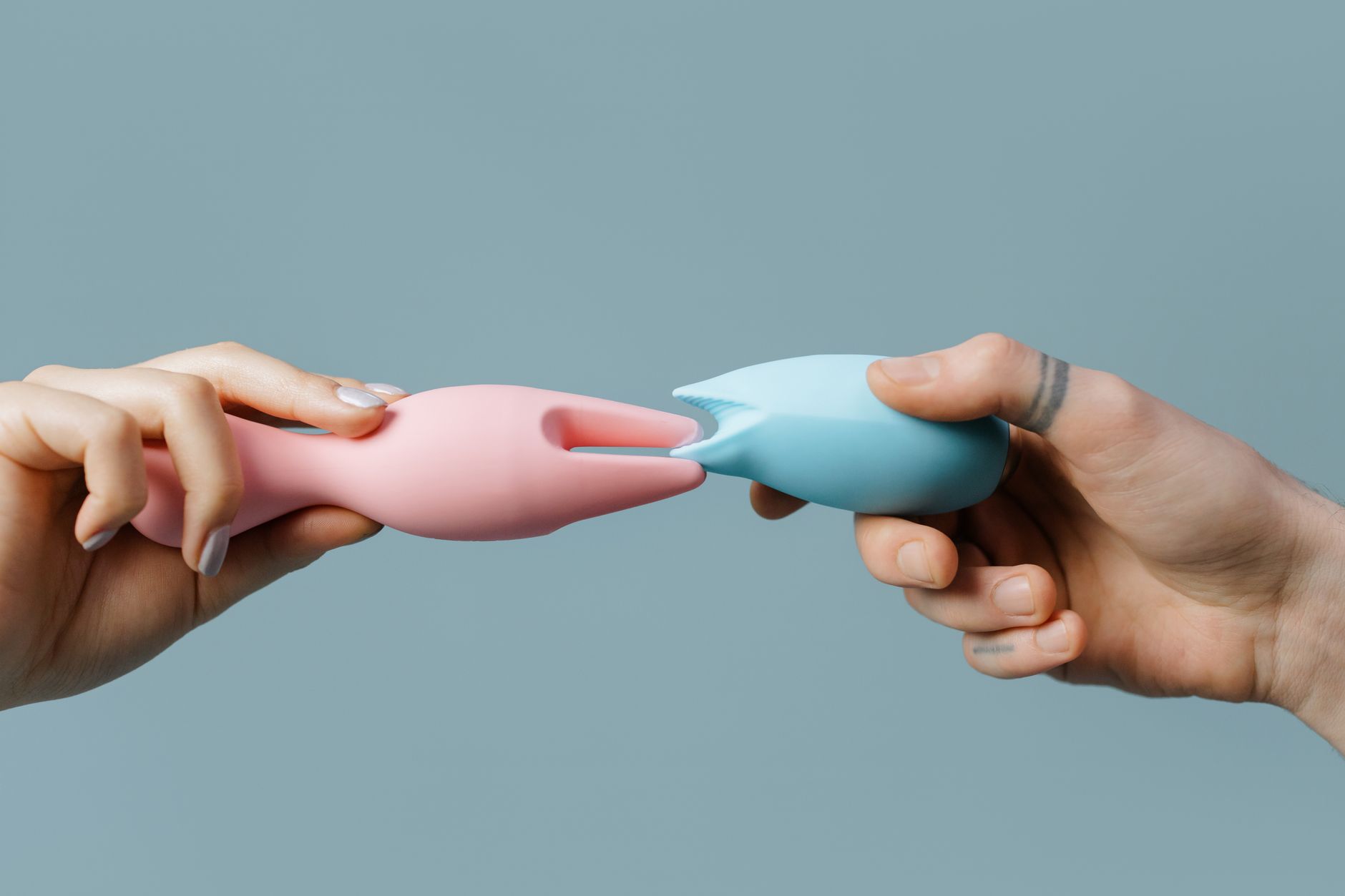
Here's what happens when you stop talking about sex
One day you're negotiating positions. The next day you're negotiating whose turn it is to take out the trash, and somewhere in that transition, sex stopped being a conversation at all. It became a thing that either happened or didn't, and talking about it felt riskier than just letting it fade.
I see this pattern constantly in couples therapy. After five, ten, twenty years together, the communication breakdown around pleasure is almost never about the sex itself. It's about feeling unsafe to be honest. It's about shame. It's about not knowing how to ask for something without making your partner feel inadequate. And by year three of not talking about it, the silence feels permanent.
Here's what I want you to know: that silence can shift. Not through a difficult conversation, but through a shift in how you touch each other.
Why words fail when your relationship history is heavy
In long-term relationships, sex talk becomes loaded. Every word carries the weight of everything unsaid between you. If you've stopped communicating about pleasure, it's usually because:
You're protecting your partner's feelings ("If I ask for something different, they'll think I'm not attracted to them anymore"). You're protecting yourself from rejection that feels bigger than sexual rejection ("If they say no to this, what does it mean about us?"). You've learned from past attempts that talking about sex triggers defensiveness or hurt. The sexual script you established years ago has become so routine that changing it feels like an accusation of boredom.
Talk requires vulnerability and the ability to hear feedback without collapsing. Touch, on the other hand, is a different language altogether. It doesn't require explanation. It doesn't carry the same risk of misinterpretation.
A lemon clitoral vibrator isn't a substitute for communication. But it can be the thing that makes communication possible again, because it reframes pleasure from something you negotiate to something you experience together.
The shift from script to exploration
When couples have been together long enough, sex often becomes automatic. The same positions, the same timing, the same rhythm. This isn't always a bad thing. Comfort is underrated. But when you've stopped talking about what you actually want, that script can start to feel like an obligation rather than a choice.
Introducing a new element—particularly something like a lemon vibrator designed for clitoral stimulation—interrupts that script in a gentle way. It's not a conversation. It's an action. And it creates a shared experience where both partners are suddenly paying attention again.
The person with the vulva gets to feel something genuinely different, which often leads to a different kind of response. The penetrating partner gets to see pleasure happen in real time, which shifts them from being the primary actor to being a collaborative witness. That's a massive shift in the dynamic.
When you introduce a lem vibrator into touch that's been routine, you're essentially saying: "I want to explore this together." No vulnerability required. No defensive conversation. Just touch.
How to begin without making it a heavy conversation
The single biggest mistake couples make is treating the introduction of a pleasure device like it needs a serious talk beforehand. It doesn't.
Instead: bring it into an intimate moment naturally. This works best when you're already kissing, already touched. Not in the middle of "we need to talk about our sex life." Just in a moment when you're connected.
Start small. The Lem is designed with suction that's gentler than some vibrators, which means you can use it on your partner (if you have a clitoral vulva) or on yourself while your partner watches or participates. There's no script required. You're just showing them what feels good.
If you're the partner with the penis or if you're using a strap-on, this changes your role entirely. Instead of being the sole source of clitoral stimulation, you become someone who can focus on penetration or other sensation while the clitoral vibrator handles that. Many couples find this collaboration feels more intimate than either sensation alone, because you're coordinating touch rather than competing for attention.
The key is to make it feel like play, not like a performance or a test. "Let's try this together" is infinitely more connective than "We need to use this because our sex life isn't working."
What shifts emotionally when you reconnect through touch
Here's what happens neurologically when you introduce a new sensation into a long-dormant sexual dynamic: attention returns. Both partners suddenly become present again. That presence is everything.
When you're using a lemon sucker or a lemon clitoral vibrator together, you're not thinking about whether you're doing it right or whether your body looks okay or whether you should have talked about this first. You're feeling. And feeling bypasses the shame and defensiveness that killed the conversation in the first place.
Many couples tell me that the first time they use a vibrator together after years of silence, they both cry. Not because something went wrong, but because it's the first time in a long time they felt genuinely present with each other sexually. That presence is what reconnects you.
I had one client say: "For five years, sex was just something that happened to us. The moment we tried the clitoral vibrator together, it became something we were doing. That feels different. It feels like we chose it."
That choice is everything. It's not about the device. It's about choosing pleasure together when you've spent years choosing silence.
The conversation that happens after, not before
Once you've reconnected through touch, conversation becomes possible again. But notice the sequence: you don't talk first and then touch. You touch, and then talking becomes easier.
After you've explored together, you might naturally find yourselves saying things like: "That felt really good." "I liked when you..." "Can we do that again?" These aren't heavy conversations. They're small, normal communications about pleasure. The shame has lifted because you've already proven to each other that you can explore together without judgment.
Over time, those small comments build back into actual conversation. "I've wanted to try something different" becomes sayable because you've already tried something different together. "I miss feeling like this was fun for both of us" becomes sayable because it's no longer theoretical. You're living it.
That's how the lemon vibrator works in relationship repair. It's not magic. It's just a tool that gets you back into a conversation your body can have before your words catch up.
When to bring in actual help
If you've tried introducing a vibrator and it creates conflict—if your partner feels threatened or rejected, or if you feel resentment instead of connection—that's useful information. It means the communication breakdown is deeper than just needing a new sensation.
Sex therapy or couples counseling isn't a failure. It's actually the best thing you can do at that point, because a trained professional can help you understand what the resistance is really about. Sometimes it's about attraction. Sometimes it's about control. Sometimes it's about old hurts that need addressing before pleasure is possible again.
But I've found that most couples who bring a tool like a lemon vibrator into their touch with genuine openness find that it softens the dynamic enough to make conversation possible. And once conversation is possible, everything else can follow.
The long view: rebuilding intimacy one touch at a time
Long-term relationships require maintenance. Not because something is broken, but because you change. Your bodies change. Your needs change. Your availability changes. After years of not talking about pleasure, it's easy to assume you're done with sexual intimacy, when really you're just done with the old script.
A lemon vibrator isn't a solution to a broken relationship. But it can be the thing that gives you permission to explore pleasure together when words have failed. It's a way of saying: let's try this differently. Let's pay attention again. Let's remember why we chose each other.
Intimacy, after all, is just attention with affection. Everything else follows from there.
People also ask
What if my partner feels threatened by a vibrator?
That fear usually isn't about the vibrator. It's about what they think the vibrator means about their adequacy. The conversation to have isn't about the device at all. It's: "I want to feel pleasure with you, not instead of you." For many couples, using a vibrator during partnered sex—rather than solo—makes this clearer. You're not replacing them. You're collaborating.
Can using a lemon clitoral vibrator bring back desire in a dead bedroom situation?
It can help restart touch when touch has stopped entirely. But if desire has vanished because of resentment, affair, or deep disconnection, a vibrator alone won't fix that. Therapy is the better first step. That said, many couples find that reintroducing pleasure—even with a tool—can shift the atmosphere enough to make other conversations possible.
How do I introduce the idea without it feeling awkward?
Don't announce it. Bring it into intimacy when you're already connected. "I want to try something" paired with an action is far less awkward than "I think we should buy a vibrator." You're not staging a production. You're just exploring together.
Is it normal to feel embarrassed using a lemon vibrator with a long-term partner?
Completely. You might feel like you're admitting failure ("Why do we need this?") or exposing a need ("What if they judge me?"). Those are real fears. But remember: you've already been vulnerable with this person. You've built a life together. Pleasure is just another kind of vulnerability. And often, the embarrassment disappears the moment you start using it.
What if communication still doesn't improve after trying a vibrator?
Then you know the communication block is separate from the sex. That's actually useful information for therapy. It means you're dealing with deeper relational issues that need professional support. A vibrator can open a door, but it can't replace the work of actually learning to communicate with safety and honesty.
Can a lemon vibrator help if I'm not sure my partner is attracted to me anymore?
It can help you both pay attention to each other again, which is the first step. But if the real issue is attraction or emotional disconnection, addressing that directly (ideally with a therapist) matters more than any device. That said, sometimes rekindling touch helps rekindle attraction. You won't know until you try.
Moving forward
If you're in a long-term relationship where sex has become silent, you don't need to fix everything at once. You need to restart attention. A lemon vibrator, a lemon sucker, or any tool designed for pleasure can be that restart. Not because the tool is magic, but because it gives you permission to be present together again.
After that, everything else is possible.
Want to explore how to reconnect with your partner on deeper levels? Read our guide on rebuilding intimacy after relationship conflict for more conversation starters and touch-based reconnection strategies.
If communication is challenging in other areas too, consider reaching out to a professional. Contact us for resources on couples therapy and relationship coaching.