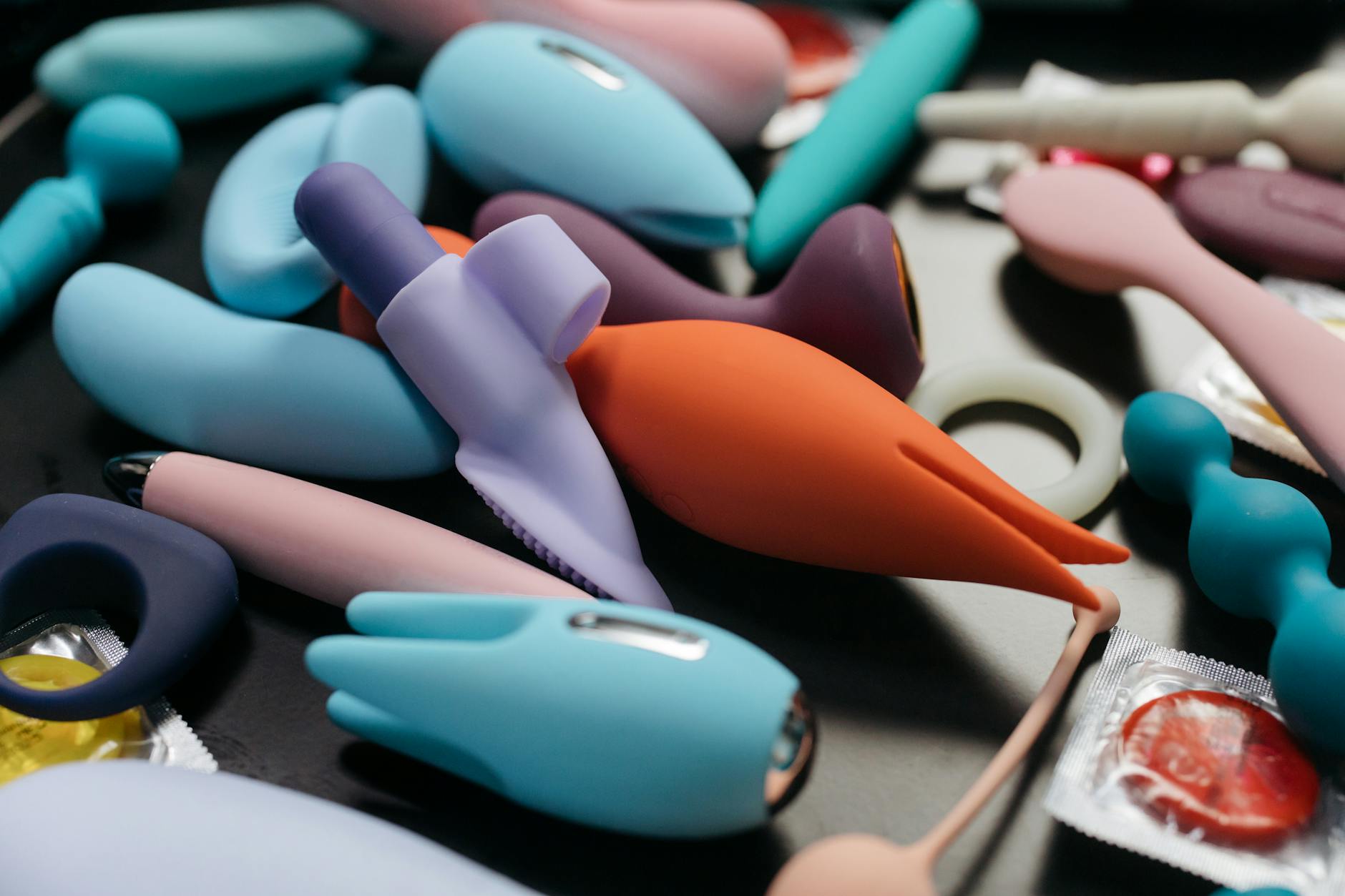
Let's be honest: we're rushing
Most of us have learned to have sex the way we eat lunch. Quick. Efficient. Done by 2 p.m. The pace gets baked into the relationship so early that nobody questions whether it's actually what either of you wants. One person initiates, arousal ramps up fast, orgasm happens or doesn't, and then it's over. Rinse, repeat.
Here's the thing. Slowing down doesn't mean you've failed at spontaneity. It means you're choosing depth over speed. And for a lot of couples who've been on autopilot, that choice changes everything.
Why slower matters (and why it takes practice)
Your nervous system has been conditioned for a certain pace. If your entire sexual history has been 15-20 minutes start to finish, your body literally doesn't know how to sustain arousal over 45 minutes. Your brain gets impatient. Your partner wonders if something's wrong. You both feel awkward. Then you give up and go back to the original pace.
This is not a character flaw. It's just adaptation. Your body has learned the rhythm it's been taught.
But here's what research on long-term couples actually shows: partners who take longer, who build arousal over time, who spend 30-45 minutes on foreplay before moving into whatever comes next, report higher satisfaction, more consistent orgasms, and stronger emotional connection. Not because slow is inherently superior. But because slowness requires presence.
You can't rush and be present at the same time.
How air-suction tools change the slow-down game
Clitoral vibrators that buzz at high frequency can feel intense quickly, which paradoxically pushes people to rush. You hit a pattern that works, and suddenly you're racing to the finish line before the sensation stops being as good.
Air-suction stimulation, like what the Lem offers, works differently. The sensation builds gradually. It's not about intense peak stimulation. It's about sustained, deepening waves of sensation. This matches the slow-down rhythm naturally.
When you're not chasing an intensity peak, you can actually breathe. You can notice your partner. You can pause, make eye contact, kiss, then come back to stimulation. The toy becomes a tool for presence, not a shortcut to orgasm.
Setting the frame: what "slowing down" actually means
This matters before you even start. Slowing down doesn't mean:
- Painful amounts of foreplay if that's not your thing
- Pressure to last a certain amount of time
- Expecting you'll be aroused for 45 minutes straight (arousal ebbs and flows)
- Losing the ability to have quickies when you want them
Slowing down means:
- Consciously choosing to spend 30-45 minutes together instead of 15
- Building in pauses, changes of touch, switching between stimulation and stillness
- Using that time to reconnect, not just to delay orgasm
- Letting sensation build without constantly chasing it
If your brain wants to check your phone at minute 10, that's normal. You're retraining a habit. It takes about three to four sessions for your nervous system to start settling into the longer pace.
The actual technique: building arousal across time
Start with touch that doesn't go straight to the clitoris. Kissing, hands on shoulders, back, inner thighs. Spend five minutes here. Your partner should do the same for you. This isn't foreplay in the sense of "getting ready for the real thing." This is the real thing.
After maybe 10-15 minutes, bring in light clitoral touch. Hands first, not the toy. This is where you're checking in with your own arousal and your partner's. How does your body want to be touched right now?
Then introduce the lemon clitoral vibrator, but start on the lowest setting. Pattern 1 or 2. Place it and hold still. Don't move it around. Let the sensation sit. For most people, this feels shocking at first. Their instinct is to chase the sensation, grind, speed up. Instead, breathe. Notice what you're feeling. Your partner can kiss you, touch your chest, watch your face.
Every five to seven minutes, pause. Remove the toy. Go back to hands, mouths, stillness. This isn't torture. It's building. Then come back to the toy at a slightly higher setting, or a different pattern.
This rhythm of stimulation, pause, stimulation, variation is what creates the deepening arousal. Your nervous system gets downtime to integrate sensation, then builds again. Most people report that when they finally reach orgasm after this pace, it's notably different. Longer. More integrated through the whole body. Less isolated to one area.
Managing the mental game
About 15 minutes in, one or both of you will feel impatient. Your brain will start offering reasons to speed up. This is just what brains do. The fix is awareness, not willpower.
Say it out loud: "I notice I'm getting impatient." Then keep going anyway. This isn't forcing anything. It's practicing a new pace.
For partners: if your partner is taking longer to reach orgasm in this new pace, that's normal and not a reflection of anything wrong. Arousal isn't linear. Sometimes the longest buildup happens right before the finish. Sometimes it plateaus and that's okay too. Slower doesn't guarantee faster orgasm. It guarantees more presence.
If your partner isn't reaching orgasm at all after 45 minutes, switch gears. This isn't about endurance marathons. It's about trying a different pace, not committing to it if it's not working.
The actual intimacy shift
When couples slow down for real, what changes isn't the technique. It's what happens in the pauses. You notice your partner's breathing. You see the moment when they lose focus and come back. You have time to laugh if something feels awkward. You have time to be present for both of you, not just focused on the finish.
For longer-term couples especially, slowing down is one of the most underrated ways to rebuild connection. You're not asking for new communication or therapy. You're just spending more time in physical presence, with less goal-orientation. That alone rewires the relationship.
When solo slowness matters too
If you're exploring this alone, the same principles apply. Don't rush to intensity. Use the lemon vibrator on lower settings. Pause. Come back. Notice what your body actually wants, not what you think you should want. Solo slow-down practice actually makes partnered slow-down easier later. Your nervous system learns the rhythm first in a low-stakes environment.
The friction points to expect
One partner might love the slow pace immediately. The other might find it frustrating. Mismatched desire for pace is real. If this is you, the solution isn't to convince your partner that slow is better. It's to do the slow version sometimes, and keep the faster version available too.
You don't have to slow down every time. But if you've never tried it, three or four sessions of 40-45 minutes with a Lem on low-to-medium settings will show you a version of intimacy you probably haven't experienced in your relationship. Whether you choose to go there regularly is entirely up to you.
Common questions about slowing down
How do you know when arousal is actually building versus just stalling?
Building arousal feels like waves. Intensity increases, holds, drops slightly, then increases again. It's not linear. Stalling feels flat. You've been in the same sensory zone for 10 minutes with no shift. If you're stalling, try a pattern change, add a different type of touch, or take a real break. Arousal needs novelty and rest. It can't sustain on one input forever.
Is it normal for erections to come and go during a 45-minute session?
Completely normal. Erections aren't a steady state. They fluctuate based on focus, stimulation type, breathing, and novelty. If your partner is worried about this, frame it as natural variation. The slow pace actually makes this easier to notice and less stressful because there's no performance deadline.
What if one partner falls asleep during the long foreplay?
Honestly, this happens. Usually it means you need more novelty (switch positions, change touch type, move to a different room), or the pace is genuinely too slow for their nervous system right now. It's not a failure. It's information. You're learning what works.
Do you need lube during slow sessions?
Yes. Even if you're not planning penetration. Sustained stimulation over time can dry things out. Keep water-based lube nearby and apply it generously. It's part of the ritual.
Can you combine slow air-suction play with penetration?
Absolutely. Many people use the Lem during penetration for clitoral and internal sensation at the same time. The air-suction pattern pairs well with slower, deeper penetrative movement. Just start with low Lem settings while penetration is happening so the sensation doesn't become overwhelming.
What if you still can't orgasm even after 45 minutes of slow buildup?
Then that's useful information about your body and your context. Not everyone orgasms from the same type of stimulation or timeline. Slow-down practice is valuable even if orgasm doesn't happen. You're training presence and connection. The orgasm is a bonus, not the point.
Start smaller than you think
You don't need a full hour. Start with 30 minutes and see what opens up. One slow session a month is better than none. You're retraining a nervous system that has learned speed for years. Give it time.
If this feels relevant to your relationship, reach out. I work with couples who want to rebuild depth and presence, and slowness is one of the most powerful tools I've seen work.
Head to /contact to set up a time to talk.