Let's talk about what actually changes
Your cycle isn't just about your period. It's a four-week fluctuation in hormones that rewires how your body responds to touch, stimulation, and pleasure. Most people have no idea this is happening, which means they're either frustrated by their own body or blaming their partner for something that's actually just biology.
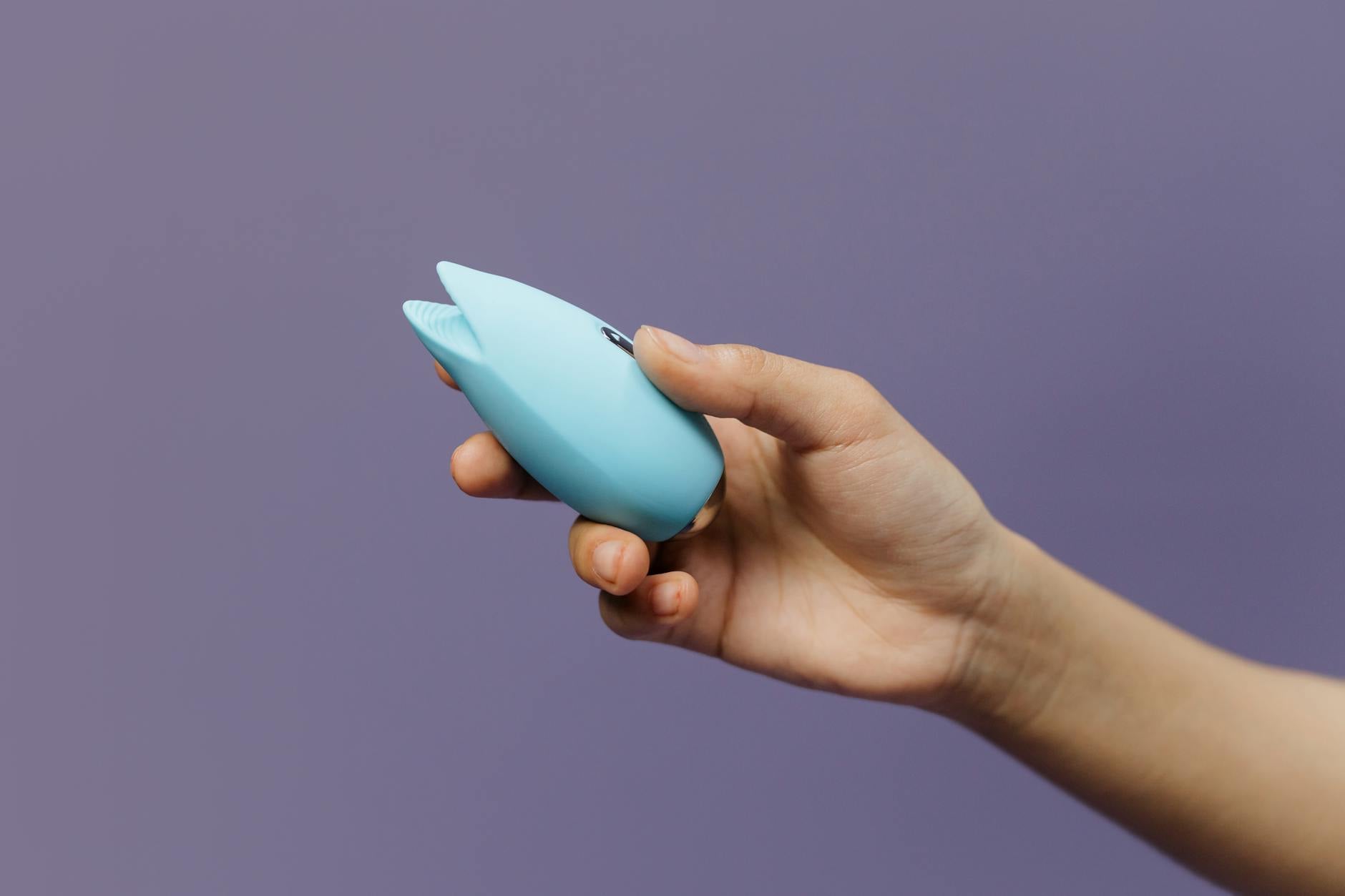
Here's what I see in my practice: someone uses a lemon clitoral vibrator on day 15 of their cycle and has an intense, full-body orgasm in under two minutes. Same person, same toy, day 22, and it takes 20 minutes and barely registers. They assume something's wrong. Nothing's wrong. Their hormones just shifted. Knowing this changes everything.
The follicular phase: faster arousal, sharper sensation
Days 1 through 14 of your cycle, estrogen and testosterone are both climbing. Your tissues are thicker, your blood flow to the genitals increases, and your nervous system is more responsive. Neurologically, your brain is primed for novelty and risk. Physically, you're more sensitive to texture and pressure.
This is when most people find that lemon vibrators feel almost too intense on the highest settings. Your clitoris is engorged. The tissues are firm. Stimulation registers faster and sharper. Many of my clients dial back the intensity during this phase or use longer warm-up patterns before jumping to the stronger pulses.
What works well in the follicular phase: higher frequency, shorter sessions (arousal peaks faster), pattern switching (your brain craves variety), and sometimes a lighter touch than usual. If you normally start at intensity level 4 on the Lem, try levels 2 or 3 and let the sensation build. You'll get to intensity 5 naturally without that numb feeling that happens when you start too hard.
One counterintuitive note: even though arousal is faster, some people actually want more buildup during this phase. Faster arousal doesn't mean you want it rushed. Tune into what your body's asking for rather than assuming speed is always the goal.
The ovulation window: peak sensitivity and fastest orgasms
Round about day 14, you ovulate. For roughly three days around that window, estrogen peaks, testosterone peaks, and your body is essentially screaming for stimulation. This is when orgasms come fastest and feel most intense.
Many of my clients report that during ovulation, they can orgasm from the lemon vibrator with almost zero warm-up. The clitoris is maximally engorged. Blood flow is highest. The nerve endings are firing on all cylinders. If you're someone who sometimes struggles with arousal, ovulation is often the window when sex feels easiest.
During this phase, a lemon sucker toy like the Lem works beautifully because you get deep stimulation without as much direct friction pressure. The suction mechanism mirrors the natural engorgement that's already happening. Some people only need 30 seconds to 2 minutes of stimulation to reach orgasm. If that's you, don't question it. Your body is just peak-primed.
One important caveat: peak sensitivity also means peak sensation, which can sometimes flip into too much. If you notice yourself getting overwhelmed during ovulation, that's not weakness. Try lower intensity levels or shorter bursts. Your nervous system is just running hotter than usual.
The luteal phase part one: sensitivity stays high but patience shifts
Days 15 to 21, you're in what I call the "still-high" part of the luteal phase. Estrogen is dropping, but progesterone is rising. Physically, you're still pretty sensitive. Mentally, though, something shifts. Your brain wants depth and connection more than novelty.
Many people find that during this phase, solo toy use feels less satisfying than partnered touch. It's not that sensation is gone. It's that your nervous system is craving intimacy and presence more than it was in week one. This is actually a feature, not a bug. Your cycle is nudging you toward connection.
With a lemon vibrator, some people find they want to use it differently here. Instead of quick sessions, they want longer, slower builds. Instead of jumping to high intensity, they want to sit with medium intensity for longer stretches. Some people find they prefer combination stimulation (the toy plus manual touch, or the toy plus a partner's presence) rather than the toy alone.
If you use a Hello Nancy lemon clitoral vibrator during this phase, experiment with the lower intensity patterns. The Lem has beautiful, slower pulse options that work really well when your body wants sustained sensation rather than sharp peaks.
The luteal phase part two: the real shift happens here
Days 22 to 28, progesterone is at its highest and estrogen is crashing. This is PMS, and yes, it affects pleasure too. Your tissues thin slightly. Blood flow to the genitals decreases. Stimulation takes longer to register. Orgasms, when they come, might feel less intense or more internally focused.
This is when people often feel broken. "Why can't I orgasm?" "Why does this not feel good?" The answer is simple: your hormones have shifted your baseline sensitivity. You're not broken. Your body just needs different input.
During this phase, many people need longer warm-up time, higher intensity settings, or different types of stimulation entirely. The lemon vibrators that felt almost too strong on day 15 now feel just right or even mild. If you usually use the Lem at level 3, you might need level 5 or 6 here. The pattern of stimulation might need to change too. Some people find they prefer constant intensity over pulsing patterns during this phase.
Here's the thing nobody tells you: this is also when partnered sex often feels better than solo play. Your body is craving the oxytocin hit of physical connection more than the dopamine spike of a solo orgasm. This isn't a pleasure deficit. It's a different type of pleasure asking for a different delivery system.
How to actually work with your cycle
The easiest system is to track two things: your cycle phase and how your usual pleasure routine feels. After two or three cycles, patterns emerge. You'll notice "oh, days 12 to 16 I need lower intensity" or "days 25 to 28 I actually prefer partnered touch."
Once you see the pattern, you're no longer fighting your body. You're working with it. This removes so much frustration. You're not thinking "why can't I orgasm?" You're thinking "ah, I'm in my luteal phase, let me adjust."
Second: your lemon vibrator settings are tools, not targets. The Lem has multiple intensity levels and patterns for exactly this reason. Using a lower intensity isn't a step backward. It's the right tool for the phase you're in. By week three or four of your cycle, you might be living at intensity level 5 or 6 instead of 2 or 3. That's not escalation. That's adaptation.
Third: pleasure is never binary. It's not "I can orgasm" or "I can't." It's a spectrum that shifts. Some days you'll have sharp, fast orgasms. Other days you'll have slower, deeper ones. Some days you'll have multiple. Some days you'll feel satisfied with arousal and touch without pursuing orgasm at all. All of those are normal. The cycle is teaching your body how to experience pleasure in different ways.
The cycle-sensitive conversation with a partner
If you're partnered, the most important thing you can communicate is this: "My body responds differently at different times of the month, and I want to work with that instead of fighting it." Most partners are relieved to hear this. It means the variation isn't about them or about attraction. It's biology.
You might say something like: "Earlier in my cycle I'm more sensitive, so I prefer lighter touch and lower intensity. Later, I need more intensity and longer warm-up. It's not about you, it's my cycle." Suddenly, the partner who felt like they were doing something wrong understands they're actually adapting perfectly.
Using a lemon clitoral vibrator as a partnered tool is different than using it solo. Some couples find the toy works best as a warm-up before partnered sex. Others use it as the main event with manual touch support. The cycle phase you're in changes what works best here too.
What if your cycle is irregular or nonexistent?
If you're on hormonal birth control, your cycle is suppressed or significantly altered. You might not experience the same sensitivity swings I've described. Some people on the pill report much steadier pleasure response throughout the month. Others still notice subtle shifts even with suppressed hormones.
If your cycle is irregular or you're perimenopausal, the fluctuations might be less predictable. Instead of a four-week pattern, you might go six weeks with one phase, then two weeks with another. Tracking becomes even more important, because the pattern won't be a standard calendar month.
If you have PCOS or other endocrine conditions, your hormonal baseline is different, which means your pleasure baseline is different. This doesn't mean anything is wrong with you. It means your starting point is just different, and the monthly shifts might look different too.
The core principle stays the same regardless: track what you notice, adjust your approach based on what's happening in your body right now, and give yourself grace for the shifts.
FAQ: Cycle and pleasure
Why do orgasms feel different at different times in my cycle?
Because your hormones are literally rewiring how your nervous system processes sensation. Estrogen affects nerve endings. Testosterone affects arousal drive. Progesterone affects how your body feels physical sensation. When these hormones shift, so does your baseline sensitivity and response time. Your orgasms aren't changing. Your body's capacity to experience them is shifting. This is completely normal.
Can I use a lemon vibrator the same way all month?
You can, but you'll likely get different results depending on the phase. If you use the same intensity and pattern every day, you might find some days feel amazing and other days feel meh. Adjusting your approach to match your cycle phase usually makes every phase feel good instead of some feeling off. It takes maybe 30 seconds to dial the intensity up or down.
What if I can't feel anything during my luteal phase?
That's usually a sign you need higher intensity or longer warm-up time, not that something's wrong. During the luteal phase, your baseline sensitivity is lower. The Lem has higher intensity settings specifically for this reason. You might also need to spend more time on lower intensities before jumping to high settings. Your body isn't broken. It just needs a different approach right now.
Is it normal that I have no sex drive during my luteal phase?
Completely normal. During days 22 to 28, progesterone is high and estrogen is crashing. Your brain is literally not as motivated toward novelty or arousal. Your body is craving rest, comfort, and connection over stimulation. This is a feature of your cycle, not a flaw in your sexuality. Some people use pleasure tools differently during this phase. Others choose to focus on other forms of intimacy. Both are fine.
Should I avoid using my lemon clitoral vibrator during my period?
Not at all. Many people find that orgasm during menstruation actually relieves cramps because it increases blood flow and releases tension. Some find the sensation feels different during their period because tissue is slightly more engorged. There's no medical reason to avoid it. Use what feels good. Some people want nothing to do with stimulation during their period. That's equally valid.
Can tracking my cycle help me understand my pleasure better?
Absolutely. After two or three cycles of noting when you use your lemon vibrator, how it feels, how long it takes to orgasm, and what phase you're in, patterns will emerge. You'll start to predict "oh, I'm day 24, I'm probably going to need higher intensity." This removes so much frustration because you're no longer surprised by your own body. You're collaborating with it.
The bottom line
Your cycle isn't a limitation on pleasure. It's a monthly reminder that your body is smart enough to shift its priorities based on what's happening hormonally. Some weeks you're built for fast, sharp sensation. Other weeks you're built for depth and connection. The pleasure tool that works perfectly one week might need adjustment the next week. That's not a product flaw or a you flaw. That's just how bodies work.
The more you track and adjust, the more every phase of your cycle becomes a different flavor of good instead of some phases feeling off. That's the real win. If you want help thinking through how to communicate these shifts to a partner or how to navigate your own pleasure throughout your cycle, reach out to us at Hello Nancy. We're here to help you understand your body, not judge it.