Let's start with the honest part
Your body is taking longer to warm up. Maybe it always has. Maybe it's a recent shift. Either way, you're probably wondering if something's wrong. It's not. What's changing is your arousal rhythm, and the good news is that understanding it might actually be the best thing that's happened to your pleasure in years.
Here's the thing nobody tells you: slower isn't a problem to fix. It's information. And once you stop treating it like a malfunction, you can actually use it.
Why bodies take longer to warm up
There are roughly five major reasons your body might need more time to reach that initial spark.
Age and hormonal shifts. As estrogen and testosterone change (whether from age, medication, life stress, or hormonal birth control), the chain reaction that used to happen in minutes can shift to 20, 30, sometimes 45 minutes. This is so common it barely registers as a variation. It's just how your body works now.
Stress and cognitive load. If your brain is running a background tab of work emails, unpaid bills, or whether you remembered to text your mum back, arousal literally cannot get off the ground. Arousal requires your prefrontal cortex to step back and your parasympathetic nervous system to take over. When you're in survival mode, that doesn't happen.
Medication side effects. Antidepressants, antihistamines, blood pressure meds, even some supplements can slow the cascade of blood flow and neurotransmitters that kick off arousal. If you started something new and this timing shifted, flag it with your doctor. It might be worth adjusting.
Relationship fatigue or disconnection. Sometimes slower arousal is your body telling you something emotional is off. Maybe you've been going through the motions. Maybe there's resentment simmering. Maybe you just need to look at your partner differently for a minute before anything else happens.
Chronic pain, fatigue, or disability. Your body might be rationing energy, prioritizing survival over pleasure. That's not laziness. That's intelligence.
The key insight: longer warm-up time is almost never a character flaw. It's usually a signal from your nervous system saying "I need something different."
The neuroscience of extended arousal
When people talk about arousal, they're usually describing what happens in the first 5 to 10 minutes. Genital blood flow increases, the clitoris begins to swell, your heart rate climbs. For some bodies, that cascade happens almost on schedule. For others, it's like trying to start a car in winter. The engine's fine. It just needs a longer runway.
Research on sexual response shows that this "acceleration phase" varies wildly across people, and it's not fixed. The same person might have a 5-minute warm-up on a Tuesday and a 45-minute one on a Friday, depending on stress, sleep, whether they ate lunch, and about 50 other variables.
When you stop fighting that timeline and start designing around it, everything changes. You're not broken. You're just operating on a different system clock.
How to restructure your pleasure when arousal takes time
This is where intentionality becomes power. Here's what actually works.
Create a proper warm-up window
Stop thinking of foreplay as a 5-minute appetizer before the main event. Reframe it as the actual event. Give yourself 30 to 45 minutes minimum, and build pleasure into every stage of that time. This isn't extra. This is the real timeline your body needs.
If you're with a partner, communicate this. "I'm enjoying a longer buildup now, and I want to make that feel intentional rather than awkward." Most partners are relieved to have a framework instead of guessing.
Use external stimulation early and often
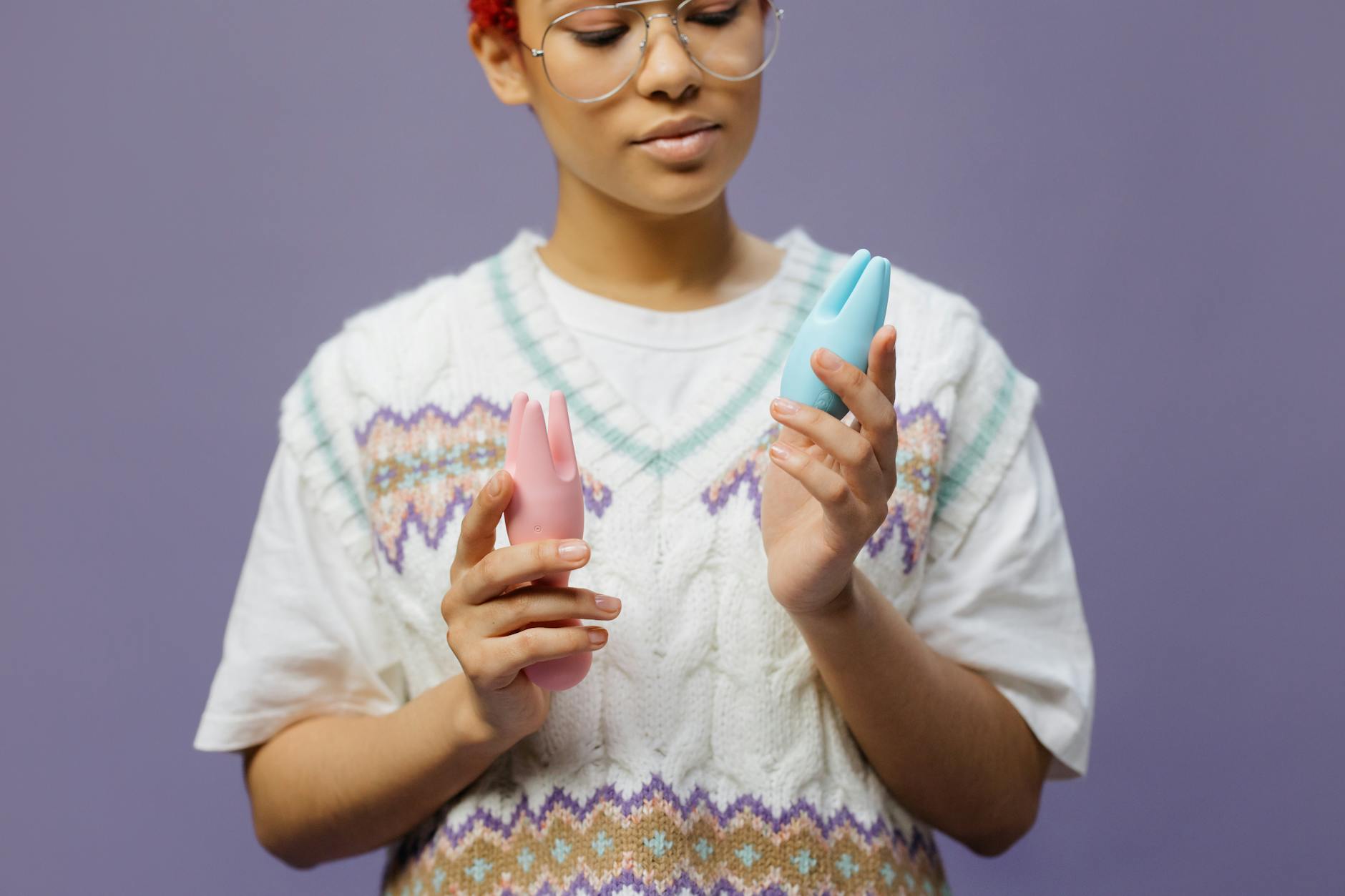
This is where the Lem shines. A clitoral vibrator like the Lem doesn't require your body to be in full arousal mode to feel good. It works on request. You can start using it 10 minutes into your warm-up window, even if you don't feel obviously aroused yet. The sensation itself can trigger arousal. You're not waiting for your body to cooperate. You're inviting cooperation through stimulation.
Start at a lower pattern (1 or 2) and let it work for several minutes. The sensation builds gradually, and your nervous system settles into it. This is completely different from the old framework of "getting warmed up first, then using toys."
Extend the plateau
Once your body does start responding, the arousal that took 30 minutes to build doesn't need to race toward orgasm. Some of my clients find that slowing down at this point, using lower vibration settings, and breathing deeply extends the pleasure phase. You're training your body that it's safe to stay in that heightened state.
With the Lem's multiple patterns, you can dial intensity up or down without stopping entirely. This gives you the control to extend pleasure instead of rushing toward climax.
Add sensory layers
When arousal takes time, boredom is a real enemy. Add texture. Add temperature. Add sound. Use your mouth, your hands, whatever feels good. The goal is to give your brain multiple sensory channels to work with so arousal has more pathways to build on.
If you're solo, this is freedom. You can take 45 minutes to explore your entire body, then use the Lem. If you're with a partner, this is connection. You're not using toys as a shortcut around intimacy. You're using them as part of a longer, richer experience.
The mental shift that changes everything
Here's the piece that actually matters most. You have to stop thinking of longer arousal as a deficit. You're not slower. You're more complex. Your body might need:
- More mental clarity before pleasure can register
- More physical touch before genital response kicks in
- More time to shift from doing mode into being mode
- More evidence that it's safe to relax
That's not a problem. That's information about what actually turns you on. And honestly, most people who have figured out their own requirements have better sex than people who've spent their whole lives chasing some imaginary five-minute standard.
When you work with your rhythm instead of against it, something shifts. The pressure evaporates. The experience becomes less about performance and more about actual pleasure. And yes, that takes longer. But you get to keep all of it.
When to check in with a professional
If arousal time has shifted suddenly and dramatically, especially if it's paired with pain, numbness, or complete loss of sensation, see a gynecologist or sexual medicine specialist. There are treatable causes. Hormone levels, blood pressure, nerve function. These things matter and they're worth checking.
If the extended warm-up time is coupled with relationship disconnection or resentment that sits with you afterward, that's a conversation worth having with a therapist or couples counselor. Sometimes slow arousal is your body's way of saying something needs to shift emotionally.
Otherwise? You're probably just normal. Your body's just got a different rhythm than the one you learned about in health class.
Making space for your own timeline
The last thing I'll say is this: your pleasure deserves the time it needs. Not rushed, not apologized for, not crammed into 10 minutes before someone falls asleep. Thirty minutes. Forty-five. An hour. Whatever your body needs to feel good is the right amount of time.
That's not selfish. That's you saying your sensation matters. And once you build that into your actual life, instead of treating it like an inconvenience you need to overcome, everything else gets better too.
FAQs: Arousal, warm-up time, and pleasure
How much longer is "normal" when it comes to arousal time?
There's no normal. Research shows healthy sexual response ranges from about 3 minutes to 45 minutes just in the initial arousal phase. The best predictor of satisfaction isn't speed. It's whether both people (or the person, if solo) know what to expect and have made space for it. If you're taking 30 minutes and that feels good, that's your normal.
Does using a lemon clitoral vibrator skip the warm-up stage?
Not quite. What it does is create sensation before your body registers full arousal, which can actually accelerate the process. You're not bypassing your own timeline. You're giving your nervous system something concrete to respond to while the rest of the physiological cascade builds. Many people find that external stimulation, like the sensation from the Lem, helps their body catch up faster than waiting passively.
Can my partner help during a longer warm-up without it feeling awkward?
Absolutely, and communication is everything. "I'm building my arousal differently now, and I'd love it if we spent 30 minutes exploring together before anything else happens" changes the entire frame. You're not asking for patience. You're describing the experience. Most partners find this kind of intentional, longer foreplay more connected than rushed sex anyway.
Is slow arousal a sign that something's wrong with my relationship?
Not necessarily. But sometimes it is. If arousal was faster before and has shifted dramatically, and you notice you're feeling distant from your partner, that's worth exploring. Has resentment built up? Is there unresolved conflict? Is life stress spilling over? Those things flatten arousal fast. A therapist can help sort whether this is about your body, your relationship, or both.
What if my body just doesn't respond to vibration early in warm-up?
That's fine. Skip the vibrator in the first 15 minutes. Use touch, kissing, temperature play, whatever actually builds sensation for you. The Lem works great once arousal has started, but not everyone needs it from minute one. Experiment. Your body will tell you what rhythm actually works.
Can I make slower arousal happen faster with the right technique?
You can't really speed it up without pushing against your own system, and that usually backfires. What you can do is remove barriers. Reduce stress where possible. Make sure you're getting enough sleep. Check medications with your doctor. But mostly, you work with the timeline you have. The pleasure that comes from honoring your own pace is usually better than sex that happens on an external schedule.
If longer arousal time is new for you and you want to explore what's driving it, or if you're looking for ways to make extended warm-up feel less like an obstacle and more like the whole point, I'd love to help. Reach out at /contact and we can talk through what's actually going on with your body.