Let's be real: stress kills sex
Not the way a headache kills sex. Not a quick "not tonight." I mean the kind of thing that makes touch feel foreign, arousal feel impossible, and your own body feel like a stranger.
Major life stress—a job loss, a health scare, a family crisis, months of careggiving—isn't just emotionally draining. It literally rewires your nervous system. When you're in survival mode, your body deprioritizes pleasure. Your sympathetic nervous system is running the show, flooding you with cortisol. Arousal requires a completely different state: safety, parasympathetic activation, the feeling that you can actually relax.
Which means standard foreplay often doesn't work anymore. And penetration? Forget it. What you need is something that can gently guide your nervous system back to safety while rebuilding arousal from the ground up.
That's where a lemon clitoral vibrator like the Lem comes in.
Why stress-fractured desire feels different
When you're stressed, your body isn't just "less interested in sex." Three specific things are happening physiologically:
First, your blood vessels aren't dilating the way they normally do during arousal. The genital tissue isn't filling with blood as readily. Your clitoris—which relies on that vascular response to engorge and become sensitive—stays relatively flat and numb.
Second, your brain's reward system is recalibrated. Dopamine drops. The regions of your brain that process pleasure are literally less active. It's not that you don't want pleasure. Your brain's access to the pleasure signal is temporarily offline.
Third, your pelvic floor is held in chronic tension. When you're stressed, you unconsciously clench. That tension blocks arousal signals and makes touch feel uncomfortable rather than good.
The result: even when you try to have sex, nothing feels right. Touch might feel numb, intrusive, or even slightly painful. Your partner might feel hurt. You might feel broken.
You're not broken. Your nervous system is protecting you. It just needs a bridge back.
How lemon adult toys work differently when you're in recovery mode
A lemon vibrator, particularly a suction-based clitoral vibrator like the Lem, works with stressed-out physiology rather than against it.
Instead of requiring your body to build arousal from scratch through manual stimulation, the Lem's suction mechanism activates your clitoral nerve endings directly. The suction creates a gentle pulse that doesn't depend on blood flow or your brain's reward circuits being fully online. It bypasses the parts of your arousal system that stress has shut down and works with the parts that are still available.
This matters because when you're stressed, you need something that doesn't ask much of you. Penetration demands your body meet a certain threshold of arousal and lubrication. A partner's hand requires you to coach them through what you're feeling. A standard vibrator often feels too intense when your nervous system is already overloaded.
The gentle suction of a lemon sexual toy feels different. It's soothing and stimulating at the same time. It doesn't require performance. It doesn't demand you be "in the mood." It simply offers a sensation, and your body can respond at its own pace.
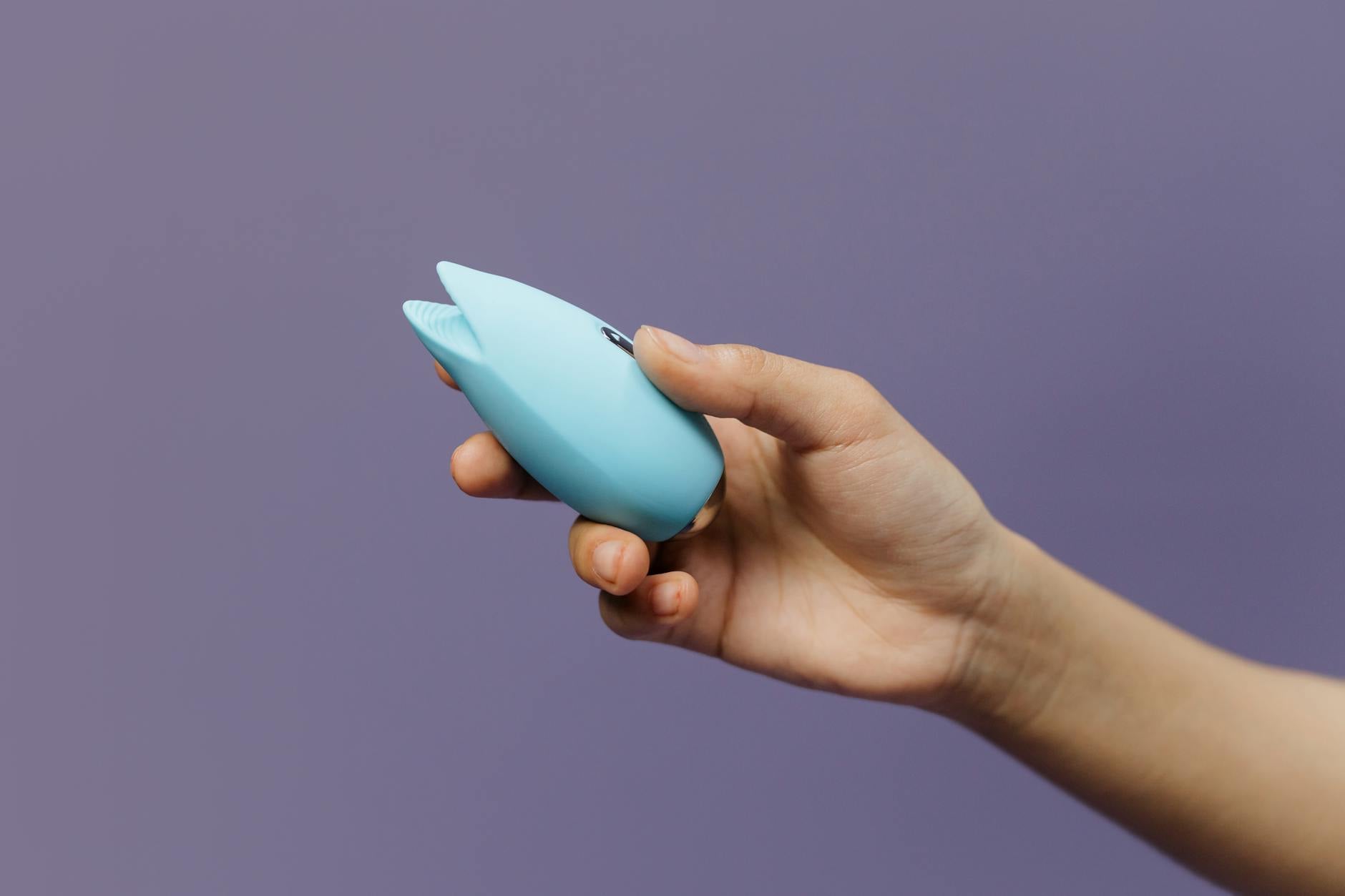
Photo by cottonbro studio on Pexels
The phase-by-phase rebuild
When stress has disconnected you from pleasure, rushing into partnered sex or even solo pleasure isn't the move. Instead, think of rebuilding arousal in phases.
Phase One: Novelty and detachment (Week 1-2)
Start with the Lem in a context that has zero performance pressure. A bath or shower. Alone. With no goal except to notice what the sensation feels like.
Don't aim for orgasm. Don't try to get aroused. Just experience the vibration on low or medium settings. Let your nervous system register that this is a safe sensation. No stakes, no expectations.
Many people report that in this phase, nothing happens. That's normal. Your brain is still in threat detection mode. You're building a new association: suction = safe + interesting, not suction = I should feel aroused.
Keep this phase short. 10-15 minutes, a few times a week.
Phase Two: Reconnection (Week 3-4)
Once the Lem stops feeling foreign, start introducing it during moments when you're already feeling even slightly calmer. After a walk. After you've had a decent night's sleep. When you're not actively stressed about something.
Still solo. Still no goal. But now you're looking for the smallest flicker of "oh, that actually feels kind of good." Not earth-shattering. Just pleasant.
You might start to notice subtle changes: your breathing deepens. You feel warm. Maybe there's a flutter of actual interest.
If nothing shifts, that's also fine. Your timeline isn't broken.
Phase Three: Building intentional arousal (Week 5+)
Once you've had a few sessions where you felt something actually shift, introduce one change: allow yourself longer sessions, and add context. Dim lights. A favorite song. A fantasy that used to work.
Now the lemon clitoral vibrator becomes a tool for rebuilding your arousal reflex itself. You're teaching your body that pleasure is still possible, that it's safe to engage with sensation, that your nervous system can shift out of survival mode.
Orgasm might happen. It might not. But the arc is: interest, engagement, physical response, then whatever comes next.
When to bring a partner back in
If you're in a relationship, your partner has probably felt the withdrawal too. Rejection, distance, and sexual disconnection create their own pain.
Don't rush to shared sex before you've rebuilt your solo capacity first. But once you've had a few sessions where the Lem brought you genuine pleasure, consider inviting your partner to watch. Or simply to be present in the room.
This does two things. One, it signals to your partner that you're reconnecting with pleasure, that the shutdown isn't permanent. Two, it gives them permission to re-engage without demanding that you perform for them.
Many couples find that one partner using a lemon vibrator during partnered sex—whether with the partner watching, participating, or simply in the same bed—feels like a natural bridge. It keeps the pressure off penetration, which is often the hardest thing to return to when stress has killed your arousal.
For more on integrating pleasure tools into partnered contexts, see our guide on how to use lemon vibrators when you want to explore with a partner.
The nervous system piece matters most
Here's what I see over and over in my practice: couples who treat sexual disconnection as purely a sexual problem—"we just need better foreplay" or "we need to be more adventurous"—often miss the real bottleneck.
If your nervous system is in threat mode, no amount of technique fixes it. You need to feel safe first. Everything else follows from that.
That's why something like a lemon vibrator is useful not because it's fancy or innovative, but because it works with your actual physiology. It's a tool that helps your body access pleasure when your brain is still too stressed to get there on its own.
Tools like the Lem are also low-pressure. They don't require communication, coordination, or the vulnerability of asking a partner for exactly the right touch. They just work.

Photo by Frank Schrader on Pexels
Beyond the tool: nervous system reset essentials
A lemon sexual toy is a useful aid, but it's not magic. Rebuilding desire after major stress also requires:
Sleep. I know you've heard this. But it's non-negotiable. When you're chronically sleep-deprived, your parasympathetic nervous system can't activate, which means your body can't access arousal regardless of what you're using.
Movement. Not gym discipline. Just 20 minutes of something that makes you feel embodied. A walk, a swim, stretching. Stress lives in your body as tension. Movement metabolizes it. Arousal is easier when you're not holding your breath.
Gentleness with yourself. If you've lost desire because of stress, expecting it to roar back immediately is cruel. Rebuilding takes weeks or months. Some days the Lem will feel amazing. Some days it'll feel like nothing. Both are fine.
Actual stress reduction. A vibrator isn't a substitute for addressing what's causing the stress. If you're burned out at work, grieving, or in an unstable situation, pleasure tools help, but they're not therapy. Sometimes you need the actual thing: therapy, a career change, time to grieve.
When stress has fractured your desire, you're not starting from zero. You're starting from a nervous system that's been protecting you. The path back to pleasure is gradual, and it starts with safety.
Common questions about reconnecting through pleasure tools
What if using the Lem feels numb or uncomfortable at first?
That's often a sign your nervous system is still in high-alert mode. Your skin's sensitivity is dampened. Give it time. Try shorter sessions (5 minutes instead of 15). Try lower intensity settings. Some people find that just holding the Lem without turning it on, as a meditation on "this is okay," helps before moving to actual vibration.
Can I use a lemon clitoral vibrator if I'm still having sex with my partner?
Absolutely. Many people find that using a lem vibrator during partnered sex—especially if penetration has felt disconnected or difficult—actually makes partnered sex feel better. You're not replacing your partner. You're creating more pathways to pleasure.
How long does it usually take to feel "normal" again?
That depends entirely on what caused the stress and whether the stressor is ongoing. If you've had a one-time crisis and you're through the worst of it, many people report shifts within 3-4 weeks of consistent solo practice. If the stress is chronic, rebuilding is slower. Be patient with yourself.
What if my partner feels threatened by me using a vibrator during recovery?
That's a conversation about what the tool means. Frame it as reconstruction, not replacement. "I'm working on reconnecting with my own pleasure because stress broke that connection. This helps my body remember how to feel good." If your partner struggles with it, they might benefit from reading material on how to use lemon vibrators when you want to explore with a partner, which addresses partner feelings directly.
Does it matter which clitoral vibrator I use?
For stress recovery, I recommend something gentle and low-pressure. The Lem's suction mechanism is particularly good because it works differently than standard vibration, and that difference can help when arousal circuits are dormant. But any quality clitoral vibrator is better than none.
What if I reach orgasm and then immediately feel guilty or anxious?
That's a sign your nervous system is still partially in threat mode. Pleasure can feel "wrong" when you're stressed because your brain associates comfort with danger ("if I relax, I'll miss something bad happening"). Orgasm followed by anxiety or guilt is extremely common in stress recovery. It usually passes as your nervous system gets the message that pleasure is actually safe. If it persists, that's worth discussing with a therapist.
The path forward
Stress doesn't kill your capacity for pleasure permanently. It just locks the door for a while. A lemon vibrator, combined with time and self-compassion, helps you find the key.
Start small. Notice what feels good. Trust that rebuilding takes time. Your body will come back online. The desire will return. You're not broken. You're in recovery.
When you're ready to explore pleasure with a partner again, we have specific guidance on that transition. But right now, the work is with yourself. Your nervous system. Your body's memory of what safety feels like.
You deserve that reconnection. Start there.