
Depression numbs more than your mood
Let's be real: depression doesn't just make you sad. It flattens everything. Your body feels like something you're living inside rather than living in. Touch becomes irritating instead of comforting. Sex feels like a chore, or worse, like nothing at all. And when you're finally clawing your way back out, one of the hardest truths is that pleasure doesn't just snap back on like a light switch.
I work with dozens of people each year who are rebuilding their relationship with sex after a depressive episode. They ask the same questions over and over: how do I know if my body still works? How do I trust sensation again? Will pleasure ever feel the way it used to? The answer to all three is yes, but the path there requires patience and gentleness with yourself.
That's where lemon vibrators come in. Air-suction devices like the Lem aren't just stronger than traditional vibrators, they're gentler in a specific way that matters for bodies coming out of depression. They reintroduce sensation without demanding anything from you.
Why depression disconnects you from pleasure
Depression is partly a neurochemical issue. Dopamine drops. Serotonin plummets. The pathways that process reward shrink. Your body is physically less able to register pleasure, especially the delicate sexual kind. On top of that, depression often brings shame, which adds another layer of disconnection: "What's wrong with me that I don't want sex anymore?"
Nothing is wrong with you. Your brain chemistry shifted. Your nervous system learned to protect you by shutting down. That's not broken. That's adaptation.
But here's what makes restarting tricky: pleasure is as much neurological as it is physical. You can't just decide to feel sensation again. You have to retrain your nervous system to recognize and welcome it. Most traditional vibrators ask too much of this retraining. They require a certain kind of sustained intensity. Your brain, still learning to feel safe, often rejects that.
Lemon clitoral vibrators work differently. The suction pattern mimics something your body already knows how to recognize. It's rhythmic, non-invasive, and you control the intensity second by second. For someone whose nervous system is still healing, that controllability is everything.
Starting from a place of permission, not pressure
The first thing I tell anyone restarting intimacy after depression is this: you don't have any obligation to want sex. Full stop. Not to a partner, not to yourself, not to some idea of what your body should do.
But there's a difference between "I don't want sex right now" and "I'm scared to want sex." If you're in that second camp, a lemon vibrator can help you separate the two. Because with a vibrator, the stakes feel lower. There's no performance. No one else's needs tangled up in your pleasure. Just your body, a device, and the very simple instruction: what feels good?
Start small. You don't have to use it for a full session. Two minutes. Three. The goal isn't orgasm. The goal is sensation. Notice what you feel. Cold plastic warming up. Vibration against skin. The difference between levels 1 and 2. This is retraining.
Many people find that the air-suction pattern on a Lem reaches past the numbness more effectively than traditional vibration. It's more insistent without being more intense. It says to your nervous system: "I'm here. Your body works. Pleasure is still possible."
Using a lemon vibrator as a nervous system reset
Depression keeps you stuck in a protective state. Your nervous system stays in fight-or-flight because it learned that safety lives there. Pleasure lives in the opposite state: a relaxed, open, trusting place. A lemon vibrator can be the gentle prompt that helps your nervous system make that shift.
Here's the practical part. Set a small amount of time aside when you won't be interrupted. Not an hour. Twenty minutes. Turn off your phone. Maybe light a candle or play music, or maybe do neither. Whatever feels least performative to you.
Start at the lowest intensity. Spend time just noticing. What do you feel? Numbness? Tingling? Pleasure? Disgust? None of those answers are wrong. The point is to notice without judging. If you feel nothing, that's information too. That tells you that your nervous system still needs some distance.
On that note: if you're in the middle of a depressive episode, this isn't the time. Wait until you're in the lifting phase, when you can feel some glimmers of interest in things. Trying to force pleasure during active depression just adds shame and disconnection.
When you're using a lemon vibrator with a partner
If you're restarting intimacy with someone you're partnered with, communication becomes the most important thing. Not because you need to be sexually transparent with them, but because depression is isolating and partners often feel that isolation acutely.
It helps to separate two conversations. One is about your body and what it needs right now. The other is about your connection with them. Those aren't the same conversation, and conflating them usually makes both worse.
You might say: "I'm exploring sensation on my own right now with a lemon vibrator. I'm not ready for partnered sex, but I want you to know I'm working on reconnection." That's one conversation. Then, separately: "I care about us and I miss feeling close to you. What would help us feel connected right now in ways that don't require sexual performance?"
Some partners want to use a lemon sucker together. That's fine, and it can be wonderful. But it's not required. Sometimes the most powerful reentry into partnered sex is knowing that your partner understands you're rebuilding and isn't keeping score.
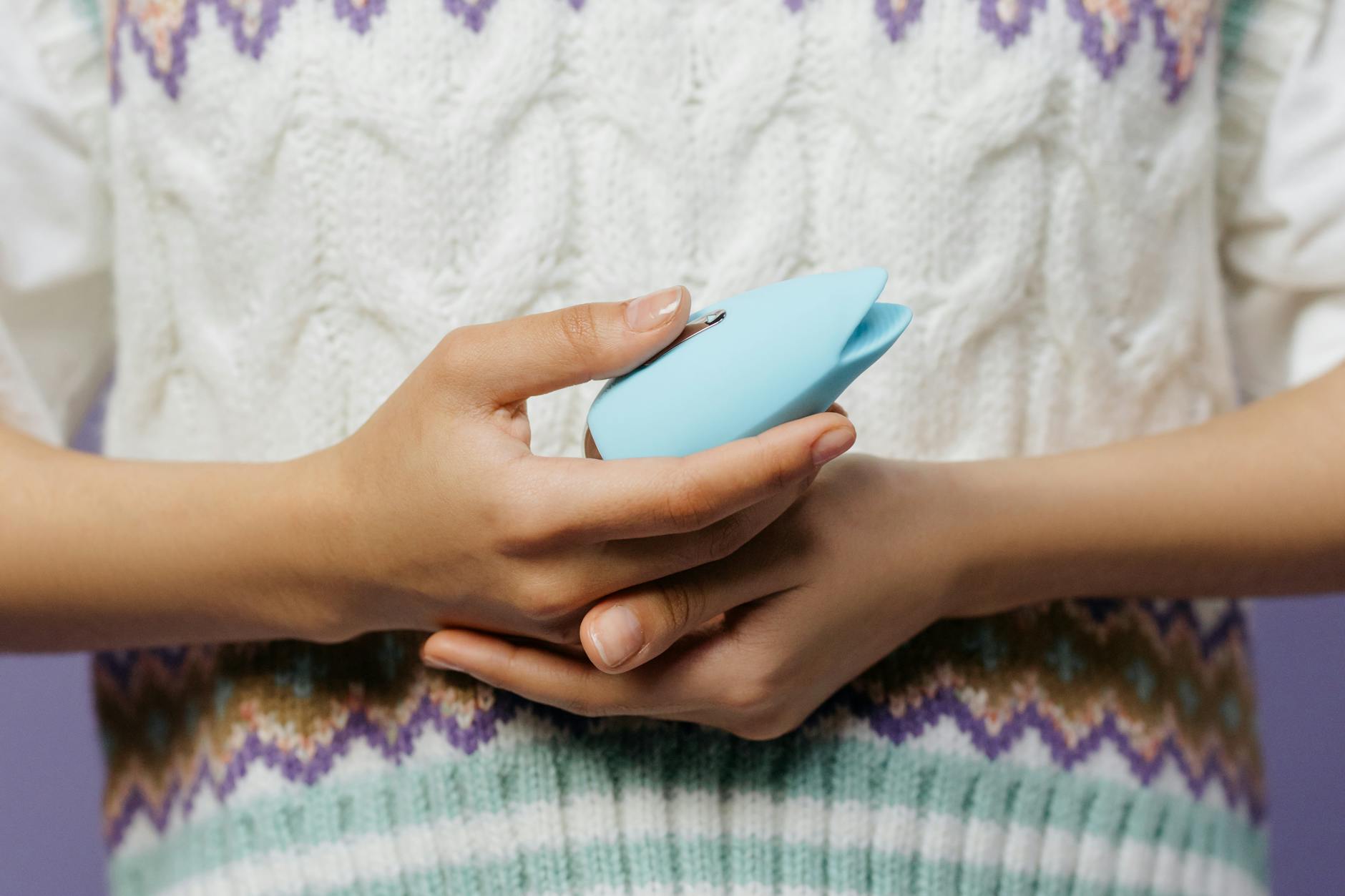
Photo by cottonbro studio on Pexels
What intensity level is right for someone rebuilding sensitivity
If you're coming out of depression and using a lemon clitoral vibrator for the first time, resist the urge to climb the intensity ladder. Start at 1. Spend a week there if you need to. The goal isn't to reach orgasm as fast as possible. The goal is to rebuild trust in what your body can feel.
Level 1 on a Lem is steady, rhythmic, and honestly quite subtle if you're used to traditional vibrators. That's the point. It's not aggressively chasing sensation. It's inviting it.
Move to level 2 only when level 1 starts to feel boring rather than overwhelming. This is a slow process. That's not a flaw. That's the work.
Many people find that as their nervous system settles, they don't actually need higher intensities. The suction pattern itself does something that jingly buzzing never did. It feels focused, intentional, almost conversational with your body rather than at your body.
The orgasm question (and the non-orgasm answer)
Here's what almost everyone wants to know: will I be able to orgasm again? And the honest answer is: probably, but the timeline is yours and not up to me or anyone else.
What matters right now isn't the destination. It's the fact that you're choosing to explore. That you're deciding your pleasure matters enough to carve out time. That you're slowly, carefully trusting your body again. Orgasms will return, or they might look different, or they might take time. But the sensation itself, the ability to feel pleasure in small doses, often comes back faster than people expect when they're using something as finely tuned as a lemon vibrator.
I had a client who didn't orgasm for eight months after her depression lifted. She started using a Lem out of pure curiosity. Six weeks later, during an ordinary Tuesday afternoon, her body remembered. She cried. That's the real outcome: not some triumphant orgasm, but the moment your body says, "Hey, I'm still here. Still capable. Still yours."
When to reach out for extra support
If you're restarting intimacy after depression and finding that nothing is working, that's not a sign you're broken. It might be a sign that depression is still holding on. It might mean your antidepressants need adjusting. It might mean you need more time.
There's no shame in reaching out to a therapist who specializes in sexuality. Not because there's something wrong with you, but because you deserve support designed for this specific reclamation. Contact Helo Nancy Lem if you have questions about using a lemon vibrator during this phase.
Depression is a real illness, and coming back from it is real work. Your body deserves gentleness. A lemon vibrator is one small tool that can help you rebuild sensation, trust, and the simple knowing that pleasure is still part of your story.
FAQ: Restarting Intimacy After Depression
How long does it typically take to feel sexual sensation again after depression?
There's no standard timeline. I've seen people reconnect with sexual sensation in weeks and others in months. The variable isn't willpower or how long you've been off medication. It's how deeply depression affected your nervous system and how much time you give yourself. Pushing for faster results usually backfires. Patience with yourself is the actual timeline.
Is it normal to feel numb even when using a lemon vibrator?
Completely normal. Numbness is often the last thing depression releases. You might feel subtle sensation at first, not the fireworks you used to feel. That's actually a good sign. Your nervous system is coming online gradually. Stick with it.
Can I use a lemon clitoral vibrator if I'm still taking antidepressants?
Yes. Some antidepressants do affect sexual response, that's true. But a lemon vibrator's air-suction pattern often works better than traditional vibrators for people on medication because it accesses sensation differently. If you're worried about sexual side effects from your medication specifically, talk to your prescriber. That's a legitimate question.
Should I tell my partner I'm using a vibrator while we're rebuilding intimacy?
It depends on your relationship and how you communicate already. If you tell them, frame it clearly: "I'm relearning what sensation feels like. This is for me right now, not because I need more from you." If you don't tell them, that's fine too. This is your body and your process.
What if orgasm never feels the same after depression?
It might not. Depression changes your brain, and coming back from that sometimes means pleasure looks different. Some people describe post-depression orgasms as less intense but more satisfying. Others say they're exactly the same once sensation returns. The only wrong answer is expecting it to be identical to before. Give yourself permission for it to be its own thing.
Is a lemon vibrator better than therapy for getting sexual function back?
No. You need both. Therapy helps your mind. A lemon vibrator helps your body relearn sensation. They work together. Start with a therapist who understands both depression and sexuality. Then, when you're ready, add the tool.
You're allowed to rebuild slowly
Depression tells you that you're broken and that reconnection is impossible. That's the illness talking. What's true is that you're healing. Your body will remember. Pleasure will come back, even if it looks different. A lemon vibrator is one small way to whisper to your nervous system that it's safe to feel again. That rebuilding is possible. That your pleasure still matters.