Here's what nobody tells you about pain during sex
It's not weakness. It's not "just stress." And it definitely doesn't mean your body is broken. Penetrative pain is a signal, and when your body sends it, the smartest thing you can do is listen instead of pushing through.
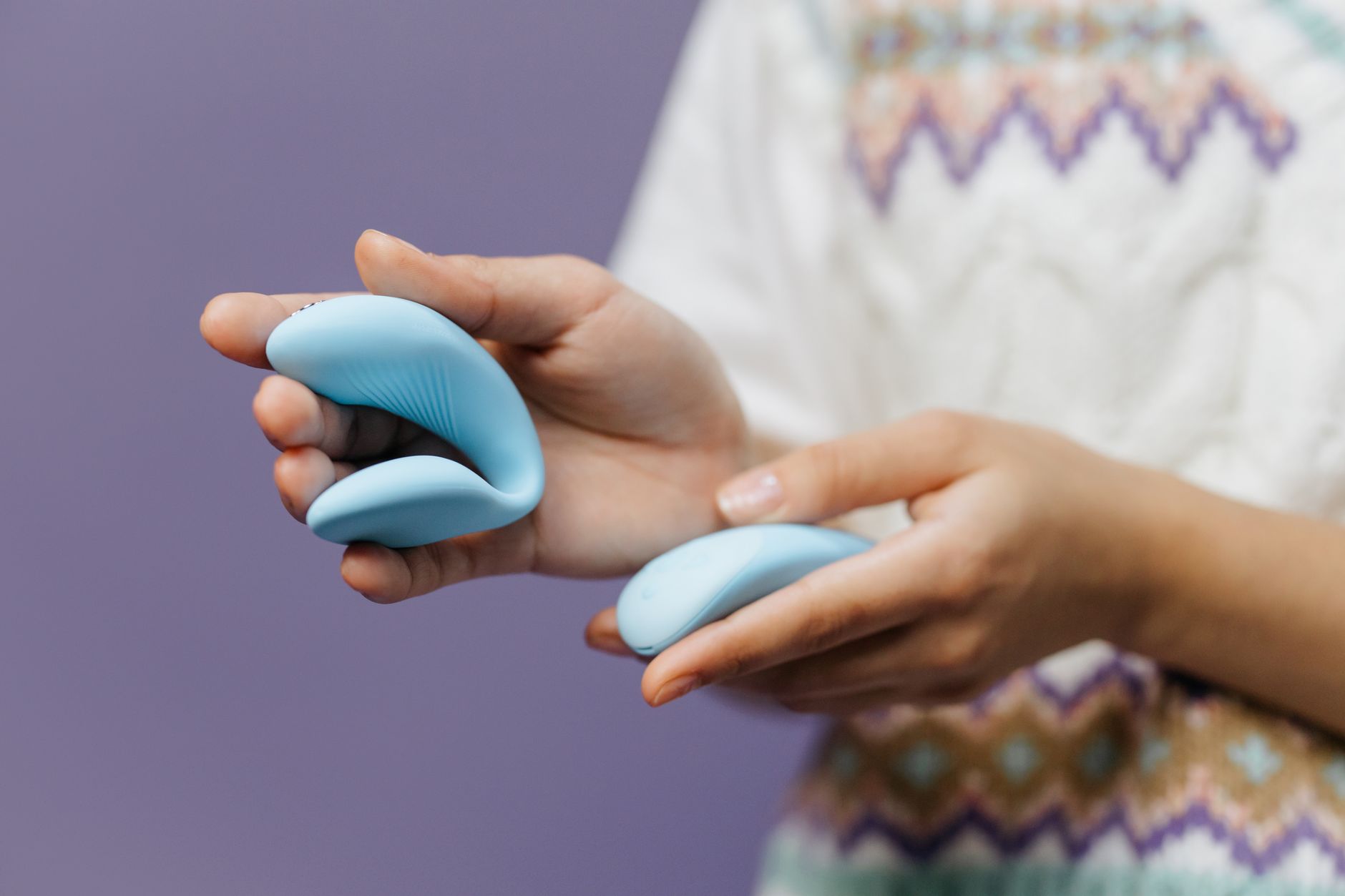
I work with couples in this exact spot all the time. One partner assumes the other is losing interest. The other is quietly dreading sex because it hurts. Both end up feeling disconnected. But here's the thing: adding a lemon clitoral vibrator into your routine doesn't solve the underlying issue. It does something better. It buys you breathing room while you figure out what's actually happening.
Why penetrative pain happens (and it's usually fixable)
Penetrative discomfort comes from three main sources: pelvic floor tension, hormonal changes that thin tissue, or friction that feels wrong for your particular anatomy. Sometimes it's a combo.
The pelvic floor is a muscle. When you're anxious about pain, it tightens. This makes penetration feel more uncomfortable, which makes you more anxious, which tightens it further. You're not imagining it getting worse. You're in a feedback loop.
Hormonal shifts (whether from birth control, menopause, or medication) can make vaginal tissue thinner and less stretchy. That tissue is tender now, so penetration requires more patience and lubrication. Full stop.
Then there's the shape and angle problem. If your partner's anatomy or typical entry angle hits a spot that's sensitive in the wrong way, no amount of warming up fixes it. You have to change the angle or the depth or both.
A lemon clitoral vibrator addresses none of these root causes. But it does something crucial: it decouples clitoral pleasure from penetration. Suddenly, you can have an orgasm that has nothing to do with whether penetration feels good. That alone changes everything.
The permission shift that changes everything
When penetrative sex is painful, both partners lock into a weird psychological place. The person with the vulva feels guilty for "not being able to" do something that's "supposed" to be enjoyable. The partner feels rejected or worried they're doing something wrong.
Introducing a lemon vibrator into your shared pleasure flips the script. Now penetration is optional. Clitoral stimulation is the headline. Penetration is an optional supporting act, not the main event.
This matters more than the mechanics. When pressure vanishes, your pelvic floor relaxes. Your nervous system downshifts from "protect the body" to "explore pleasure." Ironically, this often makes penetration feel better if and when you want it. But the magic part is that you stop needing it to feel good.
How to actually use a lemon vibrator when penetration hurts
Start with penetration off the table entirely for a session or two. Get naked, get comfortable, and use your lemon clitoral vibrator solo or with your partner watching and touching you elsewhere. No penetration. No performance expectation. Just clitoral pleasure.
Notice what happens. Most people report that orgasms feel sharper, more focused, less complicated. You're not managing pain while chasing pleasure. You're just chasing pleasure.
Once you've found your rhythm with clitoral stimulation alone, you can experiment with adding penetration back in if you want. Some people never want to. Both are completely fine. But if you do, try this: start with penetration after you've already had one orgasm from clitoral stimulation. Your pelvic floor is relaxed. Your brain has already gotten its pleasure reward. Penetration, if it happens, is a bonus sensation rather than the whole point.
Or layer them. Use your lemon vibrator on your clitoris while your partner penetrates shallowly, slowly, at a different rhythm. The sensation isn't the same as penetration alone. It's layered. Most people find this feels significantly better because the clitoral stimulation is doing most of the heavy lifting.
The conversation you need to have with your partner
Let's be direct: many partners hear "penetration hurts" and feel like they've failed. They wonder if it's something they did, something about their body, whether they're doing it wrong. That insecurity can make them defensive or distant.
You prevent that by naming it clearly. "My body is sending a signal that penetration in the way we've been doing it doesn't feel good right now. This isn't about you. It's my nervous system being protective. Here's what I want to try instead."
Then show them. Pull out your lemon vibrator. Explain that you want to explore what feels good without the pressure of making penetration work. Invite them to be part of that exploration.
Some partners will feel relieved. They were worried they were hurting you and didn't know how to say it. Others will need reassurance that this is temporary, or that penetration might happen again later, or that they're still wanted. Give them that. This is a conversation, not a lecture.
If your partner pushes back, refuses to explore alternatives, or makes you feel bad about your body's signals, that's information worth paying attention to. A good partner sees pain and thinks, "How do we solve this together?" Not, "How do I get what I want anyway?"
When to see a doctor (and why you should)
If penetrative pain is new, persistent, or getting worse, book an appointment. This isn't weakness. It's due diligence.
There are real, treatable reasons for penetrative pain: pelvic floor dysfunction, vulvodynia, endometriosis, vaginismus, hormonal changes. A pelvic floor physical therapist or a gynecologist trained in sexual health can rule out the serious stuff and offer solutions. Some are as simple as a topical cream. Others involve pelvic floor retraining.
A lemon vibrator is a wonderful tool for pleasure and exploration. It's not a substitute for medical care when something's genuinely wrong.
The pleasure expansion that usually follows
Here's what I see happen when couples take penetrative pain seriously and pivot to clitoral pleasure instead: they both discover that sex gets better, not worse. The person with the vulva is no longer bracing for pain. The partner isn't anxious about causing harm. Both are focused on what actually feels incredible.
Many couples find that clitoral stimulation, whether with a lemon vibrator or hands or both, creates more consistent and intense orgasms than penetration ever did. That's not failure. That's data. You're learning your body.
Using lemon clitoral vibrators when penetrative sex is uncomfortable isn't a workaround. It's a redirection toward what actually works for your body. That shift in focus, from "making penetration work" to "what feels genuinely good," is where real pleasure lives.
FAQ: Penetrative pain and lemon vibrators
Will using a lemon vibrator instead of penetration make my partner feel rejected?
Only if you frame it that way. Try this instead: "I want to explore what feels amazing for both of us." A partner who cares about your pleasure will feel relieved, not rejected, when you stop doing something that hurts. If they don't, that's a bigger relationship question worth addressing with a therapist.
Can a lemon clitoral vibrator help relax my pelvic floor if it's tight?
Not directly, but yes indirectly. Relaxed pleasure is one of the best ways to help your pelvic floor release tension. Using a lemon vibrator in a low-pressure context, without penetration, lets your nervous system downshift. Over time, that teaches your pelvic floor that sexual touch doesn't have to mean threat. If tightness is severe, a pelvic floor physical therapist can add targeted exercises.
Is penetrative pain always permanent, or can it get better?
It depends on the cause. Hormonal changes, pelvic floor tension, and positioning problems are usually fixable. Endometriosis, vulvodynia, and some other conditions need medical care and take longer to resolve. The good news: whether it's temporary or long-term, you don't have to put your pleasure on pause while you figure it out. A lemon vibrator lets you have a full sex life right now.
What if my partner doesn't want to use sex toys?
That's their choice. But a lemon vibrator isn't a demand. It's an option. You can use it solo, you can use it with a partner who participates differently, or you can explore clitoral stimulation with hands alone. The tool isn't the point. The point is prioritizing what feels good for you.
How do I know if penetrative pain is something medical or just needing better communication?
You don't, so see a doctor. Only a professional can rule out conditions like endometriosis or vaginismus. Once you've got medical clearance, or once you're working with a provider, communication and exploration (with tools like a lemon vibrator or through other means) become part of your toolkit. Both matter.
Can I use a lemon vibrator during partnered sex if penetration is sometimes comfortable and sometimes not?
Absolutely. You don't have to choose. Some people use a lemon vibrator for clitoral stimulation while their partner penetrates. Others use it solo while their partner does something else. You get to design what works for your body and your relationship right now.
The takeaway
Penetrative sex pain isn't a life sentence or a relationship death knell. It's a signal. When you listen to it instead of muscling through, you often discover new forms of pleasure you wouldn't have found otherwise. A lemon clitoral vibrator, whether it's the precise sensation of a Lem or another trusted clitoral vibrator, gives you a concrete way to explore pleasure on your terms. Add honest communication with your partner and medical support if needed, and you've built a foundation where real healing and real pleasure can happen.