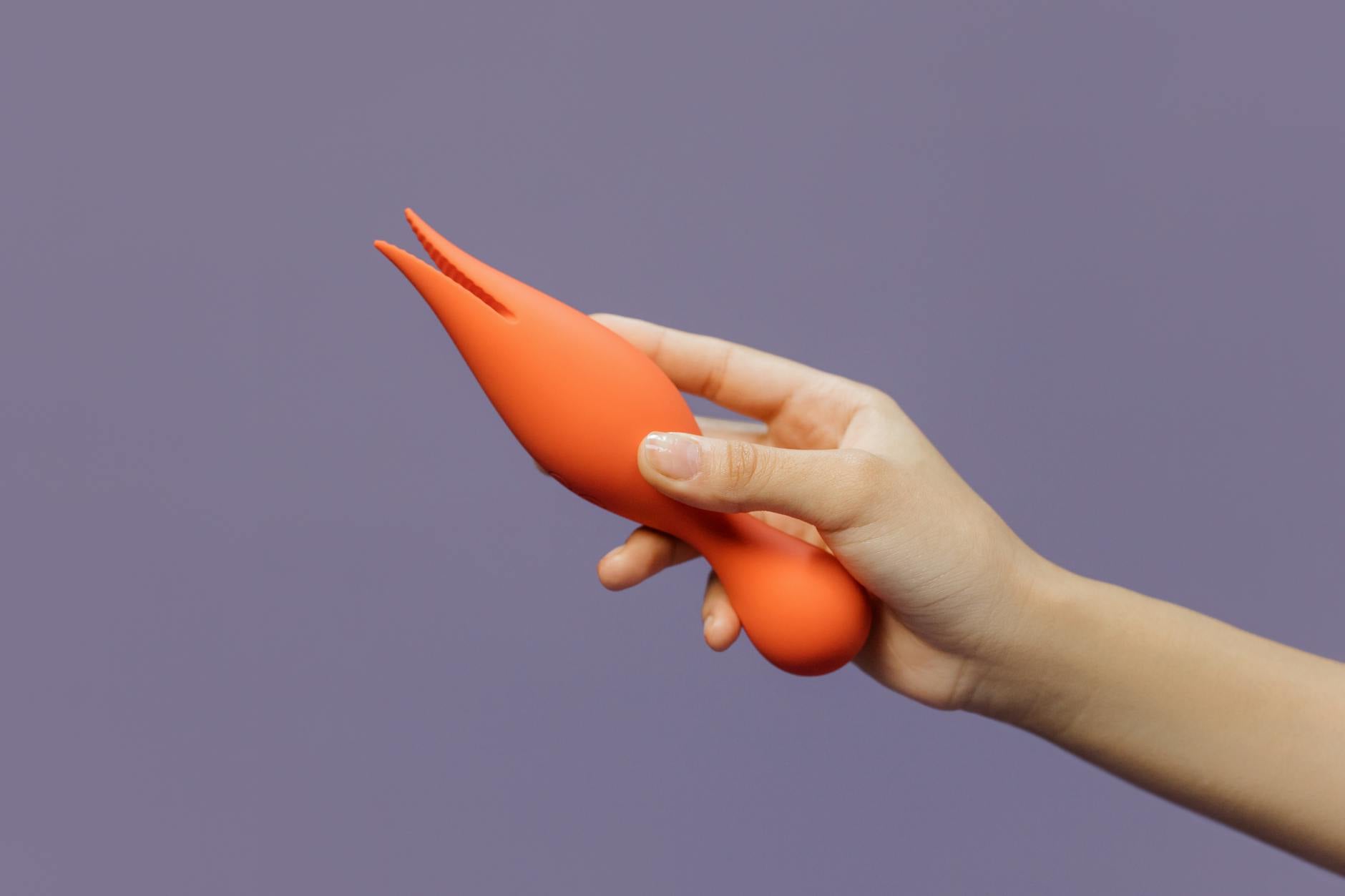
How to Use Lemon Vibrators When Communication Breaks Down With Partners
When talking about pleasure feels too hard or impossible, sometimes an action speaks louder than words. Here's how a clitoral vibrator can restart a conversation that's stalled.
Plenty of couples can have "the conversation" about pleasure. They sit down, maybe with a glass of wine, and talk it through. Then there's everyone else. Maybe you've tried bringing it up and it went nowhere. Maybe your partner shut down. Maybe you shut down. Maybe you both did, and now the topic feels so fraught that words just make it worse.
Here's the thing: sometimes the route back to intimacy isn't through talking. Sometimes it's through doing. And that's where a lemon clitoral vibrator can act as a genuine turning point, not because a toy "fixes" anything, but because it can say things that words got stuck trying to say.
I work with couples on this regularly, and I want to be clear about what I'm not claiming. A vibrator isn't a substitute for honest conversation or couples therapy. But it can be a bridge to that conversation. It can restart a nervous system that's spent months in defense mode. It can create an opening where words might finally land.
Most couples don't realize why talking about sex feels different from talking about, say, money or parenting. Sex touches shame in a way other topics don't. You're asking your partner to witness a vulnerable part of you. You're implicitly asking them to change something about how they're touching you or approaching you, which can land as criticism even if you frame it gently. You're risking rejection at the most tender level.
When that happens once and goes badly, your nervous system learns to stay quiet. Silence feels safer than the pain of being misunderstood.
The other piece is this: most of us were taught that good partners automatically know what feels good, that communication about pleasure is somehow unromantic or needy. So you might want something but feel ashamed asking for it, or your partner might want to give you pleasure but feel hurt that they "can't" do it intuitively. You're both stuck in a story that makes talking feel like failure.
That's where introducing a lemon vibrator shifts the dynamic entirely.
When I recommend a clitoral vibrator to couples whose communication has stalled, I'm not suggesting it as a solo toy or even as a replacement for partnered touch. I'm suggesting it as a shared experience, a third object in the room that isn't either of you, isn't about blame or pressure, and says something your voice got too scared to say.
Here's what it does. A lemon clitoral vibrator like the Lem shifts the conversation from abstract problem to concrete sensation. Instead of "I need more stimulation" (which can feel like a complaint), you're showing your partner exactly what your body responds to in real time. There's no room for misinterpretation. There's no way to make it personal. It's not a reflection on them. It's data.
That's liberating for both people. Your partner gets to stop guessing. You get to stop holding the entire emotional weight of making sure they feel okay about your pleasure.
Timing and framing matter enormously. Here's how I work with couples on this.
Frame it as a tool for your body, not as a fix for them. Don't say, "I need this because you're not doing it right." Say, "I want to explore what feels really good for my body, and I'd like you there while I do it." This is completely true. A lemon sucker vibrator helps you learn your own nervous system, period. The fact that your partner gets to witness it and participate is the bonus.
Introduce it outside of sex first. Show them the toy, let them hold it, explain how it works. Make it a normal object in your home, not a loaded surprise mid-intimacy. Let the strangeness wear off before you're both vulnerable. This alone can dissolve so much of the tension.
Start with you using it while they're present but not the focus. This is gentler than a joint first experience. You're exploring your own pleasure. They're there. No pressure on them to do anything right or figure anything out. Gradually, as everyone gets comfortable, that can evolve into them participating. But the first step is just presence without performance.
I want to name the common fears that come up for partners, because your knowing them can help you navigate this with compassion.
Some partners worry that introducing a vibrator means you're not attracted to them anymore or that they're being replaced. This usually comes from their own insecurity about arousal or performance, and it's rooted in the same myth that got you stuck in the first place. That good partners automatically satisfy their partner's body. Reframe it with them: "This isn't about you. This is about me understanding my own pleasure so I can be more present with you."
Some partners feel embarrassed or squeamish. That's just unfamiliarity. Time and normalcy help. You might also choose a less intimidating first vibrator. The Lem is beautifully designed, but some partners find a smaller, less "toy-like" option less triggering initially.
Some partners feel guilty they "didn't know" what you needed. This is actually an opening. You get to say, "I didn't know either. This is us learning together."
Once you've introduced it as a normal object, you can use it as part of rebuilding sexual connection.
Start slow. This isn't about orgasm first. It's about sensation and attention. You might use a lemon clitoral vibrator on the lowest setting while your partner touches you elsewhere. This is intimate without being demanding. You're not asking your partner to perform a specific act. You're creating a moment of shared presence.
As you get more comfortable, your partner can hold the vibrator while you guide them. "A little higher." "Slower." "Right there." This might be the first genuine feedback loop you've had in months, and it's framed as a collaborative exploration rather than criticism.
Honestly, sometimes the deepest intimacy happens here. Because you're finally letting your partner see exactly what your body wants. You're not managing their feelings. You're not staying quiet to protect them. You're being known.
Here's the part people don't expect. Once you've had that shared sensory experience, the words often come easier. Not because the vibrator "fixed" anything, but because you've now proven to each other that you can be vulnerable together and survive it. You've created a new neural pathway where pleasure communication feels safe instead of dangerous.
That's when you can actually have the bigger conversation. "I've felt stuck around this." "I want us to find our way back." "I need to know you want this too." The vibrator was the opening. Now the talking can happen in a nervous system that's less defended.
A vibrator can restart communication, but it can't replace genuine therapeutic work if the relationship has deeper issues. If your partner refuses to engage with this at all, if there's resentment too big for a toy to bridge, or if you're both so disconnected that touching feels impossible, couple's counseling isn't optional. It's necessary.
But in my experience, most couples who've lost the thread around pleasure haven't lost the relationship itself. They've just got stuck in a story about how to talk about it. A lemon vibrator, used thoughtfully, can genuinely interrupt that story.
Using a clitoral vibrator together doesn't guarantee your sex life will suddenly be perfect. But it does usually guarantee that you'll feel less alone in your body, and your partner will feel less helpless. You'll both have moved from "we can't talk about this" to "we can touch this." From theory to practice.
Will introducing a vibrator make my partner think I'm not satisfied with them?
Most partners initially worry this, but the framing you use matters enormously. If you position it as "I want to learn my own body better so we can both feel more pleasure," it's usually experienced as inclusive rather than rejecting. If your partner continues to feel threatened, that might point to deeper insecurity worth addressing in therapy. But the vibrator itself isn't the problem.
How do I bring this up if we've never talked about sex at all?
Start by naming the avoidance itself, not the solution. "I've noticed we don't really talk about pleasure, and I miss feeling connected to you that way." Then, a few days later, share an article or bring home a vibrator as a conversation starter. Sometimes an object is easier to discuss than an abstract idea.
What if my partner thinks vibrators are "unnatural" or wrong?
This usually comes from a belief that sex should be intuitive or that using tools means something is broken. You might ask them: "Would you say a shower is unnatural because we use soap? Would you say a bed is wrong because it helps us get comfortable?" A vibrator is a tool for sensation. That's all. If your partner is firm in their objection, that's worth exploring in couples therapy, because it might point to control or shame that needs attention.
Is it okay to use a lemon clitoral vibrator if we're trying to rebuild trust after infidelity?
Yes, but only after some genuine repair work has happened in therapy. A vibrator can help reestablish physical connection, but it can't replace honesty, accountability, and rebuilding safety. Use it as part of recovery, not instead of it.
Should I orgasm from the vibrator every time, or is it okay if it just feels good?
Orgasm is never the point. Pleasure is. If a lemon vibrator feels good and helps you stay present, that's a success even if you don't climax. Sometimes when we remove the pressure to orgasm, orgasms actually come more easily. Let it be about sensation, not performance.
What if we use it once and then go back to not talking?
One experience doesn't fix months or years of disconnection. But it creates a new possibility. If you find yourselves slipping back into silence, bring it up gently. "That felt good. I want to do that again." You're not asking for perfection. You're asking for practice.