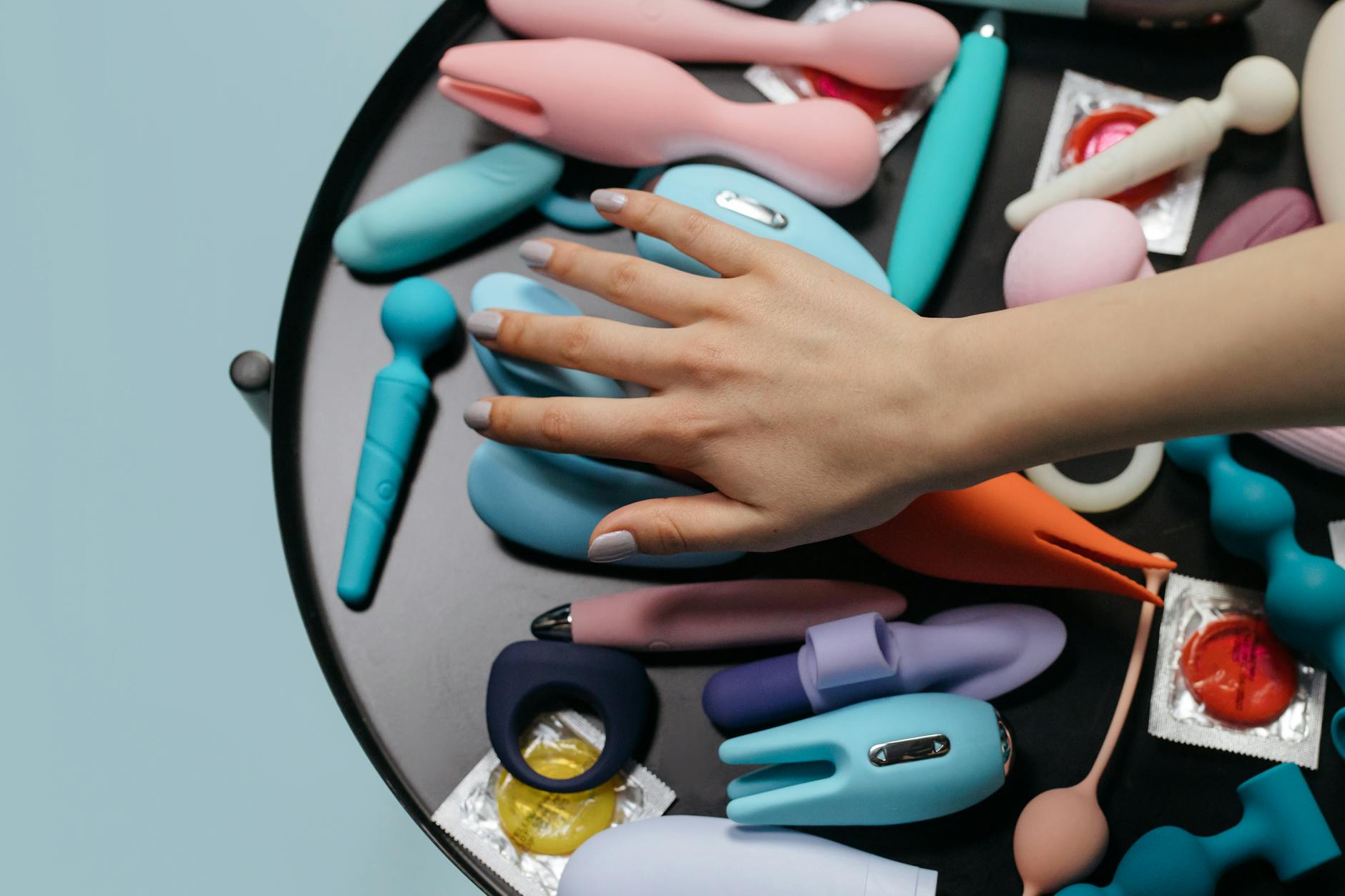
Here's what nobody tells you about clitoral sensitivity
Your clitoris has eight thousand nerve endings packed into a space smaller than a pea. That density is why touch feels so intense. But "intense" doesn't mean "one setting fits everyone." Some people find direct contact unbearable. Others need constant pressure to feel anything. Most fall somewhere between, and the tricky part is that your own sensitivity shifts month to month, year to year, even day to day.
I've worked with hundreds of people trying to figure out why a lemon vibrator or any clitoral vibrator feels amazing one week and painful the next. Usually it's not the toy. It's that they've never actually assessed their baseline sensitivity or learned how to adjust technique to match it.
Why clitoral sensitivity varies so much
Three main drivers shift your sensitivity:
Hormonal fluctuation. If you menstruate, estrogen peaks around ovulation and dips during your period. Higher estrogen usually means more sensitivity. Lower estrogen means you might need more pressure or longer warm-up. If you're on hormonal birth control or hormone therapy, your baseline is different still.
Arousal state. The clitoris has an erection phase just like a penis does. When you're properly aroused, blood flows into the tissue, it swells slightly, and the nerve endings move closer to the surface. That makes stimulation feel less intense, paradoxically. Skip arousal and jump straight to the lemon vibrator, and the same setting feels painful because the nerves are still tucked under tissue. Most people blame the toy. It's usually the warm-up.
Nerve density variation. Not all clitorises are shaped the same. Some people have the glans (the tip) exposed and sensitive. Others have a hood that sits lower, protecting the glans. Some find the visible part barely responsive and need stimulation of the internal clitoral body. Your anatomy is unique, and your lemon vibrator technique needs to be too.
The sensitivity spectrum: where do you land
Instead of guessing, actually know your baseline. Try this: Use your hand (no vibration) to touch your clitoris at different pressure levels. Light touch. Medium pressure. Firm pressure. Which feels best when you're well-aroused but not close to orgasm yet? That's your baseline.
Highly sensitive (light touch feels intense). Your sweet spot is 1-3 on your toy's intensity scale. Many people in this range find that direct contact on the glans triggers overstimulation or numb response. The indirect approach usually works better: position the lemon vibrator or other clitoral vibrator just off to the side of the clitoris, or over the hood if you have one. Let the vibrations reach the nerve endings without direct pressure. You're looking for steady, predictable stimulation, not variation.
Moderate sensitivity (medium pressure feels good). You're probably in the 4-7 range on most toys. This is where direct contact, slower pulse patterns, and sustained pressure build pleasure steadily. You have room to experiment with different positions: directly on the glans, over the hood, circling the general area. Most lemon vibrator techniques work in this zone because you get feedback from multiple intensities without hitting a ceiling too fast.
Lower sensitivity (you need firm, consistent pressure). You might live in the 8-10 range or find that pulse patterns don't work at all. Consistent stimulation beats variation for you. Some people with lower sensitivity find that suction-style toys like a lemon sucker work better than traditional vibration because they create a different kind of pressure. If your clitoris needs serious input, longer warm-up and maybe building arousal first with penetration or partner touch helps too.
Technique adjustments for each sensitivity type
For highly sensitive people: the indirect method. You don't place the vibrator directly on the clitoris. Instead, hold it on the hood, the side, or the area just above. Let the vibration diffuse across the tissue instead of concentrating on one point. Start at the lowest setting and don't increase intensity unless you're genuinely comfortable. Most highly sensitive people get their best orgasms from building arousal very slowly, then keeping the stimulation steady while their brain catches up. Patience is your technique.
For moderate sensitivity people: the direct exploration method. Experiment with three positions. First, the direct approach: vibrator on or very close to the glans. Second, the hood approach: vibrator over the clitoral hood with a layer of fabric between if needed. Third, the circular approach: holding the vibrator just below or to the side and moving it in small circles. Do this over three separate sessions and notice which position creates the fastest arousal arc and most predictable sensation. Then stick with that as your baseline until your body tells you it needs something different.
For lower sensitivity people: the pressure method. You need sustained contact and often increased intensity. Try holding the vibrator in place for 30-60 seconds rather than moving it around. Some lower-sensitivity folks get better results with suction-based stimulation, where a lemon sucker creates gentle negative pressure instead of vibration. If you're using a traditional vibrator, don't be afraid to use the highest settings. This isn't overstimulation for you. It's just the right amount of input for your nervous system.
The warm-up gap nobody talks about
Arousability and sensitivity are different things. You might be highly sensitive in terms of nerve response but have slow arousal. Or moderate sensitivity with very fast arousal. The mismatch is where a lot of frustration lives.
If you have slow arousal and high sensitivity, your technique needs to be: long warm-up (15-25 minutes of partner touch, kissing, penetration, whatever gets you going), then introduce the lemon vibrator at a low setting on an indirect position. Let your body catch up. If you rush to the vibrator, your clitoris isn't ready and everything feels wrong.
If you have fast arousal but lower sensitivity, you can get to the vibrator quickly but you'll need higher intensity. The good news is that because you arouse easily, you'll hit that responsive state faster and the toy will feel more effective.
Pattern versus intensity: why both matter
A lemon vibrator or other clitoral vibrator gives you two dials to adjust. Intensity is how strong the vibration is. Pattern is whether it's constant, pulsing, ramping, or some other rhythm.
Highly sensitive people usually prefer consistent, unchanging patterns. The pulse functions sometimes create an overwhelming on-off sensation. Moderate and lower sensitivity people often need pattern variation because constant sensation at one intensity can numb out after a few minutes. Your nervous system stops registering it.
Try this: Start with constant vibration at your baseline intensity. If it feels good, stay there. If it gets boring or numbing after 3-4 minutes, switch to a pulse pattern. If the pulse pattern feels jarring, go back to constant. There's no rule. You're just noticing what your body actually responds to.
Common mistakes people make
Mistake one: assuming you're insensitive when you're just not aroused. A huge percentage of people think their clitoris doesn't respond well to vibration when they've actually never given their body 20 minutes of warm-up. Arousal changes everything. Before you decide you need a different toy or technique, try it when you're genuinely aroused. You might be surprised.
Mistake two: staying at the same setting forever. Your sensitivity changes. Age, hormones, medication, stress, relationship status, how much sleep you got last night. All of it shifts how your clitoris responds. Check in with yourself every few months. What worked last year might need adjustment now.
Mistake three: blaming the toy when the angle is wrong. The difference between "this doesn't work for me" and "this is incredible" is often millimeters of angle or seconds of warm-up, not the toy itself. Before you give up on a lemon vibrator, try it in five different positions and at five different intensity levels over separate sessions. Map your actual response instead of assuming.
Testing your sensitivity: the four-session framework
Don't try to figure this out in one go. Over the next two weeks, do this:
Session one: establish your baseline. Use your hand or a basic vibrator at setting two or three. Focus entirely on noticing what feels good, not on reaching orgasm. Spend 10-15 minutes. Note whether you prefer direct contact, indirect contact, or moving contact. That's your baseline position.
Session two: test one intensity level up. If you used setting three last time, use four. Same position, same timing. Does it feel better or worse? Overwhelming or perfect?
Session three: test different positions. Stay at your baseline intensity but change the angle or placement. Direct, hooded, to the side, over fabric. Notice which creates the fastest arousal curve.
Session four: integrate warm-up. Start with 15 minutes of whatever gets you aroused (partner touch, penetration, your own fantasy, whatever), then introduce your lemon vibrator at your best intensity and position. Notice how much faster and more reliably you reach orgasm when arousal is truly there.
After four sessions, you actually know something. That's your foundation.
FAQ: Questions people actually ask about lemon vibrators and sensitivity
Why does my clitoris feel numb after using a vibrator for a few minutes?
Your nervous system is adapting to constant stimulation. This is totally normal. Your brain gets less input from unchanged sensation, so it feels like numbness even though the vibration is still there. Solution: change the pattern every few minutes if you're using constant vibration, or switch to a pulsing pattern. Or take a 30-second break, let your clitoris reset, and start again. The second round of stimulation usually feels intense again because your nerves have readapted to baseline.
Is there a way to know if I'm using the wrong lemon vibrator for my sensitivity level?
A lemon vibrator or any clitoral vibrator is wrong for you if, after 4-6 proper sessions with adequate warm-up and five different intensity settings, you still don't feel anything or feel only pain. But most people find that the issue isn't the toy. It's the angle, the warm-up, or the pattern. Before you buy a different vibrator, try your current one in 10 different ways. The toy usually stays. Your technique changes.
Does sensitivity matter more than vibration pattern?
They're equal partners. You can have the perfect intensity but a terrible pattern, and it won't work. Or a great pattern at the wrong intensity, same problem. Map both. Your sensation depends on the intersection of the two.
Will my sensitivity change if I use a lemon vibrator regularly?
Maybe, but not in the way most people fear. You won't become "desensitized" in the sense that you'll need more and more vibration forever. Your nervous system does adapt, which is why pattern variation helps. But your baseline sensitivity is pretty stable. What changes is your familiarity with your own body and your ability to adjust technique.
I have low sensitivity. Should I always use the highest setting?
No. Test the full range across multiple sessions. Some people with lower baseline sensitivity get their best orgasms at medium settings once they're truly aroused. Others do need high intensity. The warm-up state matters as much as the setting. Don't default to max. Experiment.
Can partners help me figure out my sensitivity?
Yes, but boundaries matter. The single most useful thing a partner can do is help with the warm-up phase. If you have slow arousal, a partner's touch, kissing, penetration, whatever gets you genuinely turned on, sets you up for success with your lemon vibrator. Then you introduce the toy yourself or your partner does, at a lower intensity than you might use alone. Partner plus vibrator isn't about intensity. It's about building arousal state.
Your sensitivity is your baseline, not your limitation
Knowing whether you're highly sensitive, moderate, or lower sensitivity isn't about fixing something. It's about choosing the right input for your nervous system. Once you know, using a lemon vibrator becomes less like guesswork and more like play. You're matching the tool to the person, not fighting your body's actual wiring.
Sensitivity shifts. Technique can shift with it. But the starting point is always honest observation of what your clitoris actually likes, not what it's supposed to like or what worked for someone else.
If you're still wrestling with technique or sensitivity questions, reach out to our team. We're here to help you figure this out.